 At the beginning of October 2025, the Trump administration announced plans for direct-to-consumer prescription drugs, called TrumpRx. Although facts are still hard to come by, it appears that at its core, TrumpRx and DTC, which is supposed to be launched sometime in 2026, is meant to create a government-run portal that will steer patients directly to a drug manufacturer’s direct-to-consumer (DTC) website to purchase medications without going via their health insurance or a U.S. retail pharmacy.
Details of how the new plan is supposed to work will be announced sometime next year. It may be that the basic model will be similar to the special arrangement with Pfizer, Inc. that was announced on September 30th, a few weeks before TrumpRx was introduced. But the details of that deal are also hard to pin down; it’s worded in very broad terms.
So far, the only concrete change is giving individual State Medicaid programs access to Most Favored Nation (MFN) drug prices for all new Pfizer medicines. Since Medicaid customers are already paying zero (or heavily discounted) prices that the government subsidizes, it’s hard to see how this relates to the majority of U.S. consumers.
Back to basics: why US drug prices are so much higher than in other countries
When comparing retail drug prices in the U.S. with those in other developed countries, it comes down to comparing apples with oranges. In most other Western countries, there is some form of government-funded socialized healthcare, in which the state takes up some of the burden of providing healthcare services and funds it out of the government’s coffers. In all of those countries, prescription drug prices are centrally controlled, and government agencies – the country’s equivalent of the FDA – have fixed (capped) retail pharmacy prices. Any difference between the pharmacy’s price and what is paid to the manufacturer comes out of the government’s healthcare budget.
By contrast, the US operates healthcare as a “hands-off” free enterprise. There are a few exceptions that apply to a relatively small proportion of the population, who may qualify for special (but strictly limited) support via government agencies. Veterans Affairs, Medicaid (a joint federal and state program providing comprehensive healthcare coverage to low-income individuals and families), and Medicare (a federal health insurance program that covers most people aged 65 or older and some younger people with disabilities) are the main channels through which subsidized healthcare services are delivered.
In the U.S., the FDA’s primary role is to ensure the quality and effectiveness of medications, with no consideration of consumer costs. In the other countries, there is a balancing act between the two.
Past actions by the U.S. Federal Government
There have been government moves in the past to address the overpricing of pharmaceuticals, which has led US consumers to pay the highest prices in the world.
In 2022, the Biden administration passed the Inflation Reduction Act (IRA), which requires the manufacturers of ten specific drugs to pay a rebate to Medicare if prices rise faster than the rate of inflation. The overall effect of this has been limited, since it was only applied to a very small range of drugs, only applied to purchases by customers who are covered by Medicare, and was only scheduled to begin sometime in 2026.
The second Trump administration revisited an idea first floated in the earlier administration (in 2020), issuing an Executive Order entitled “Delivering Most-Favored-Nation Prescription Drug Pricing to American Patients.” This order proposed a “most favored nation” pharmaceutical pricing strategy, which was supposed to bring prices charged to US consumers to the same levels as those charged for the same medications in other developed countries. Since then, other executive actions changed the direction of the push, including a high tariff on brand-name and patented pharmaceutical products, unless the manufacturer commits to building its manufacturing plant in the U.S. So far, the tariff is not enforced and there is uncertainty whether the latest executive order will make the earlier one redundant.
Some other private initiatives are available, such as Cost Plus Drugs , which offers a range drugs, primarily generics, direct to customers. The basic problem in this case is that most newer drugs still under patent aren’t included in the company’s basket, so patients may have to wait years before they can benefit from advances in medical therapies. And even in the case of generics, the prices charged by Cost Plus can still be 40-50% higher than the same branded outside the U.S. For example, Myrbetriq ER 50mg, the generic treatment for overactive bladder, costs $10 per dose from Cost Plus, but the original branded Myrbetric costs just $3.20 from IsraelPharm.
Myrbetriq ER 50mg, the generic treatment for overactive bladder, costs $10 per dose from Cost Plus, but the original branded Myrbetric costs just $3.20 from IsraelPharm
Websites like GoodRx, which specialize in advertising one-off deals (manufacturer’s discounts and pharmacy coupons) that can reduce the cost of drugs by 30-40%. These may be great for conditions that require short-term treatments. Still, in the case of medications for chronic conditions (such as osteoporosis, diabetes, heart failure, enlarged prostate, hormone replacement therapy, and many more), the first-time price doesn’t persist. Soon, buyers are back to either hunting for new coupons or paying full retail prices. Using the same example of generic Myrbetriq, the average discounted price across the board on GoodRx is $8.30 per dose, compared to just $3.20 from IsraelPharm.
It’s a hurdle race, not a sprint
Right from the beginning, MFN deals like the one announced with Pfizer face many legal and supply-chain hurdles. At first glance, it’s possible that granting a company MFN status contradicts existing laws (IRA) and can’t work within other federal pricing frameworks (e.g. the Medicaid Drug Rebate Program and 340B Drug Discount Program). So, although 2026 is supposed to open the floodgates, allowing U.S. consumers to buy their meds at worldwide prices, it’s still very much a matter of “watch this space”!
How IsraelPharm will help in the meantime
Don’t hold your breath waiting for TrumpRx to kick in. For over 15 years, IsraelPharm has been supplying customers in the US (49,000 so far, and growing daily) with premium quality branded and generic medications at prices far below the retail prices charged in the US. In Israel, there are tight controls on the pricing of pharmaceuticals. The savings come mainly from Israel’s universal health care, which is highly subsidized by government coffers, capping the price of all regulated drugs and, in general, keeping them between 40 and 80 percent lower than prices in US retail pharmacies.
In the table below, we compare the usual prices customers are having to pay in a US retail pharmacy for some of the most popular drugs to our prices:
| Product | Main use | US Retail price | Our price | You save |
| Jardiance
10 mg tablets |
Diabetes | $25.33 | $3.50 | 70% |
| Eliquis
5 mg tablets |
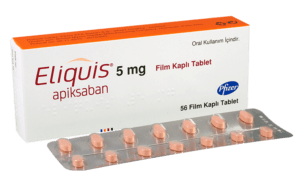
Blood thinner | $11.90 | $2.30 | 81% |
| Wegovy
4×2.4 mg injections |
Diabetes/weight loss | $1590 | $599 | 62% |
| Trintellix
10 mg tablets |
Major Depressive Disorder (MDD)
|
$20.67 | $3.60 | 83% |
| Myrbetriq
50 mg tablets |
Overactive bladder | $18.33 | $3.20 | 83% |
| Xarelto
20 mg tablets |
Prevents blood clots | $25.33 | $3.60 | 86% |
| Jakafi
20 mg tablets |
Treating myelofibrosis | $306.25 | $60.71 | 80% |
| Prolia
60 mg vial |
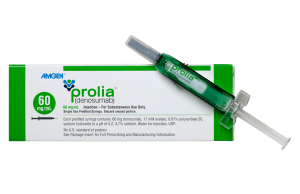
Osteoporosis | $2510 | $480 | 81% |
| Xeljanz
11 mg tablets |
Rheumatoid arthritis | $188.68 | $25.55 | 86% |
These prices are current as of this publication, October 2025, based on published US retail prices, and do not include any U.S. tariffs.
IsraelPharma offers discreet, fast, and efficient door-to-door delivery.
Frequently asked questions about buying drugs from IsraelPharm
Do I still need a prescription from my US healthcare provider when I buy from Israel?
Yes. We can only supply medicines (other than over-the-counter products) when we are emailed or faxed a copy of a prescription written by a licensed physician from the customer’s country of origin.
Why are brand drugs more expensive than generics, and are there any differences?
Developers of new drugs have a specific period (usually between five and seven years) during which only they can sell the drug. During this period, they have legal protection against copying. It is a branded and patented product. Only when the patent has expired, the FDA can approve the manufacture and sale of generic versions that have the same therapeutic benefits and similar qualities as the original brand. Generic drugs are usually cheaper than the brands because there is less research and development cost than the original, patented version.
Why would a doctor prescribe an expensive branded drug rather than a cheap generic?
In many cases, healthcare providers who have been prescribing the branded drug for many years are more familiar with how it works, which patients will get the right benefits, and other such patient-related specifics. For these and other reasons, doctors may prefer sticking to the familiar brand. Pharmacies are not allowed to swap generics for branded drugs unless the prescription specifically allows this.
Are there any drugs that IsraelPharm can’t sell?
We do not supply controlled substances, such as psychotropic drugs like Xanax, Ritalin, and Valium, or opioids, due to the possibility of theft, loss, or possible misuse once the parcel is out of our hands.
Will the drugs coming from IsraelPharm be identical to those from a US pharmacy?
In some cases, the medication we supply comes from factories outside the U.S.. It could also have a different brand name and have a different shape or color. In the case of branded drugs, the manufacturer has to be either a subsidiary or a licensed associate of the patent holder of any branded drug. You can be confident that the medicine matches the prescription and is of the highest quality.