The old saying “the devil is in the detail” has never been more applicable than it is right now. Multiple patients are discovering that what they regarded as straightforward access to prescribed medication once a doctor had issued the script is being slowed down, and in some cases completely blocked – Evenity cover has been denied by their health insurers.
A great deal of discussion is going back and forth on social media platforms, citing instances where patients who have been diagnosed with severe osteoporosis, and have been recommended for treatment with Evenity by a specialist physician, are being blocked by insurance denial on legal grounds, and have to either revert back to older, cheaper and less effective treatments, or pay the full cost of the drug themselves.
In a very broad overview, the typical circumstances involved are fairly straightforward.
- Thousands of patients have been diagnosed with advanced osteoporosis, a condition in which skeletal bones become progressively weaker, which increases the risk of fracture.
- After consultation with a physician, the decision has been taken to treat the patient with Evenity, a specific medication which has been approved by the FDA for that condition.
- Despite the fact that the patients are covered either by private or company-sponsored health insurance schemes, they face delays, bureaucratic procedures and calls for additional medical examinations and authorizations from other physicians. All of which make it impossible for them to start treatment with Evenity unless they either take on additional out-of-pocket costs, or obtain the medication privately.
- Appeals, arbitrations, and, in some cases, legal arguments have all failed to resolve the issue in many instances, resulting in patients not receiving optimal treatment.
Much of the discussion involves highly technical and, to a lay person, confusing terminology, so in this article, we will try to explain in the simplest possible terms the bare bones of the matter so that anyone facing the same situation will be able to understand and deal with any sticking points that are holding up their treatment. The relevant points are outlined below.
What is osteoporosis?
Osteoporosis is a condition where bones become weak and fragile because the normal balance of bone renewal is disrupted. In healthy bone, there is a constant cycle involving osteocytes, osteoblasts, and bone-resorbing cells that break down and rebuild bone tissue.
- Bone is continuously renewed through a process of breakdown and formation.
- In osteoporosis, bone breakdown exceeds bone formation.
- This leads to reduced bone mass and density.
- The internal structure becomes porous and fragile.
- Fracture risk increases, especially in the hip, spine, wrist, and lower leg.
Who is at risk of developing osteoporosis?
Osteoporosis risk increases with age and is influenced by several biological and lifestyle factors.
- It commonly develops in older adults.
- Postmenopausal women are at highest risk.
- Genetic predisposition plays a role.
- Low calcium and vitamin D intake contributes.
- Smoking, inactivity, and alcohol use can worsen risk.
How is osteoporosis diagnosed?
Diagnosis of osteoporosis is based on bone density testing and clinical symptoms. A bone mineral density scan provides a T-score that indicates bone strength.
- A T-score of -2.5 or lower confirms osteoporosis.
- Osteopenia represents an earlier stage with moderate bone loss.
- Symptoms may include back pain, height loss, and fractures from minor stress.
- Many patients have no symptoms until a fracture occurs.
How serious is advanced osteoporosis?
Advanced osteoporosis significantly increases the risk of serious fractures and long-term complications.
- Minor falls can result in major fractures.
- Spinal compression fractures may occur.
- Mobility can be severely reduced.
- Loss of independence is common.
- Fractures, especially hip fractures, are linked to increased mortality.
What are the treatment options for advanced osteoporosis when there is a risk of fracture?
Treatment for severe osteoporosis typically combines medications that slow bone loss with those that actively rebuild bone.
- First-line treatments often include bisphosphonates such as Fosamax, Actonel, and Reclast.
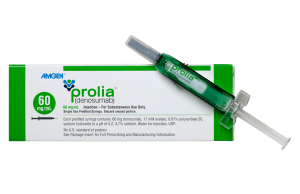
- Osteoporosis biologic treatment options include Prolia (denosumab) and Evenity (romosozumab).
- Anabolic agents such as teriparatide and abaloparatide stimulate new bone growth.
- Hormone-related therapies such as raloxifene may also be used in selected cases.
Comparison of osteoporosis treatment options
| First-line treatments | ||||
| Examples | Mechanism | Uses | Pros | Cons |
|---|---|---|---|---|
| Fosamax, Actonel, Reclast | Slow bone breakdown | Early-stage osteoporosis |
|
|
| Biologic therapy | ||||
| Prolia | Prevents bone resorption | Moderate to high risk |
|
|
| Anabolic therapy | ||||
| Evenity | Builds bone and reduces loss | Very high fracture risk |
|
|
Evenity is usually the preferred treatment because it both increases bone formation and reduces bone breakdown, which is why it is often considered in high-risk patients.
Why can insurance cover for patients with osteoporosis be blocked?
Evenity insurance denial is often the result of structured insurance policies rather than a direct rejection of medical need. These policies are designed to control costs and ensure standardized treatment pathways.
- High drug cost compared to older therapies.
- Strict eligibility criteria.
- Administrative and documentation requirements.
- Reliance on predefined treatment pathways.
How insurers validate claims for Evenity
Insurance providers use structured criteria to determine whether evenity prior authorization should be approved.
- Step therapy osteoporosis policies require trying lower-cost drugs first.
- “Failure” may be defined as continued bone loss or new fractures.
- Bone density thresholds such as T-score ≤ -2.5 are often required.
- Additional risk factors must be documented.
Steps insurers take before authorization of Evenity
Authorization processes are typically detailed and time-consuming.
- Assessment of “very high fracture risk.”
- Requirement for prior use of bisphosphonates or Prolia.
- Documentation of lab values such as calcium levels.
- Approval limited to 12 months of treatment.
These steps are often linked to broader romosozumab approval issues seen across multiple insurance systems.
What denial of Evenity means for patients
Denial can have real clinical and emotional consequences.
- Delayed access to optimal treatment.
- Increased risk of fractures.
- Emotional stress and frustration.
- Reduced confidence in the healthcare process.
Authorization delays
Delays are a common part of the process and can affect even well-qualified patients.
- Complex paperwork requirements.
- Frequent technical denials.
- Requests for additional clinical evidence.
Possible steps when denied access to Evenity
Patients and healthcare providers can take several steps to address evenity access blocked situations.
- Submit formal appeals with supporting documentation.
- Request peer-to-peer review between physicians.
- Use manufacturer assistance programs.
- Persist through multiple levels of review.
What alternatives are there for patients to continue treatment for osteoporosis without insurance?
When insurance coverage is denied, patients may still have options to maintain treatment continuity.
- Switch to first-line therapies such as bisphosphonates.
- Use Prolia as an alternative biologic therapy.
- Explore cost-sharing or partial coverage options.
- Pay the evenity cost without insurance directly if feasible.
- Consider international sourcing when insurance cover is not longer an option, by sourcing Evenity from us.
IsraelPharm provides access and supply continuity
Reliable access to medication is critical for osteoporosis treatment, especially when therapy follows a fixed monthly schedule. IsraelPharm provides a structured solution for patients facing access barriers.
Cost: Branded medications such as Evinity and Prolia are typically priced significantly lower than US retail rates, making long-term treatment more manageable.
Access: IsraelPharm supplies the exact branded medication prescribed, supporting continuity when local availability is inconsistent.
Convenience: Medication is delivered directly to the patient’s home, removing the need for repeated pharmacy visits.
Continuity: Ongoing treatments such as Evenity require consistent dosing schedules. IsraelPharm helps maintain uninterrupted supply.
Legitimacy: IsraelPharm operates as a licensed international pharmacy. A valid prescription is required, and treatment remains under physician supervision.
Frequently asked questions about Evenity coverage denial
Why can Evenity cover be denied bt insureres?
Insurance companies deny Evenity coverage primarily due to cost and treatment sequencing policies. Most insurers require patients to try and fail lower-cost medications, such as bisphosphonates or Prolia, before approving Evenity. This approach, known as step therapy, is based on the idea that less expensive treatments may provide similar benefits. Even when a specialist recommends Evenity, insurers may still require strict documentation of fracture risk, prior treatment failure, and lab results. As a result, even medically appropriate cases can face delays or denial until all criteria are satisfied.
What is step therapy in osteoporosis treatment?
Step therapy in osteoporosis treatment is a policy that requires patients to try one or more lower-cost medications before moving to a newer or more expensive option like Evenity. This means patients often need to demonstrate that earlier treatments did not work or caused side effects. Insurers define “failure” in specific ways, such as continued bone loss or new fractures. While this approach is intended to manage costs, it can delay access to treatments that may be more effective for high-risk patients, particularly those needing anabolic therapies that actively rebuild bone.
Can Evenity be approved on appeal?
Evenity can sometimes be approved on appeal, especially if additional medical evidence is provided. Appeals typically include detailed documentation from the treating physician, such as bone density scores, fracture history, and prior treatment outcomes. Peer-to-peer reviews between doctors may also help clarify the clinical need. In some cases, external review organizations may determine that denial criteria are not aligned with current medical guidelines. While approval is not guaranteed, persistence and strong clinical evidence can improve the chances of overturning an initial denial.
How much does Evenity cost without insurance?
The cost of Evenity without insurance can be significant, as it is a biologic medication administered monthly over a 12-month course. At the moment, the monthly list price for Evenity without insurance is $2,630. Patients covered by Medicare Part B usually pay $783 ( he deductible – $257 – plus 20% of retail). Prices for people covered by private and corporate insurance are set individually, and frequently involve co-pay.
This high cost is one of the main reasons insurers impose strict approval criteria. Some patients explore alternative sourcing options or financial assistance programs to reduce out-of-pocket expenses. It is important to discuss cost considerations with a healthcare provider when evaluating treatment options in cases where Evenity cover has been denied.
Is Prolia a substitute for Evenity?
Prolia is not a direct substitute for Evenity, although both are used in osteoporosis treatment. Prolia works by slowing bone breakdown, while Evenity has a dual effect by both increasing bone formation and reducing bone loss. This difference makes Evenity particularly useful in patients with very high fracture risk who need rapid improvement in bone strength. Insurers often require patients to try Prolia first, but clinical guidelines increasingly recognize that anabolic therapies like Evenity may be more appropriate as initial treatment in severe cases.
What should patients do if Evenity cover has been denied?
When Evenity access is blocked, patients should work closely with their healthcare provider to explore all available options. This includes submitting appeals, ensuring all required documentation is complete, and requesting peer-to-peer reviews. Patients may also consider alternative therapies or financial assistance programs. In some cases, sourcing medication through licensed international providers may be discussed. While the process can be frustrating, understanding the requirements and remaining persistent can improve the chances of gaining access to appropriate treatment.
Further reading
- Why was a postmenopausal woman denied coverage for romosozumab treatment? Medical Advisory Board
- Evenity denial by empoloyer-sponsored insurance following hip fracture. Mayo Clinic
- Brand selection for medically necessary indications. Aetna Insurance
- Evenity for treating osteoporosis. IsraelPharm
- Uncover your genetic risk for osteoporosis. IsraelPharm
- What you need to know about osteoporosis awareness and prevention. IsraelPharm
Glossary
- Abaloparatide An anabolic osteoporosis medication that stimulates new bone formation, used in patients at high risk of fracture.
- Anabolic therapy A class of osteoporosis treatment that actively rebuilds bone tissue rather than only slowing further bone loss.
- Biologic therapy A treatment using laboratory-engineered proteins or antibodies that target specific biological pathways involved in bone remodeling or disease progression.
- Bisphosphonates A class of drugs including Fosamax, Actonel, and Reclast that slow bone breakdown and are commonly prescribed as first-line osteoporosis treatment.
- Bone mineral density A measurement of calcium and mineral content in bone, used to assess bone strength and diagnose osteoporosis through scanning.
- Bone resorption The natural process by which specialized cells break down bone tissue, releasing minerals into the bloodstream as part of normal bone renewal.
- Evenity (romosozumab-aqqg) A monoclonal antibody biologic that both increases bone formation and reduces bone breakdown, administered monthly over a twelve-month course.
- Osteoblasts Specialized cells responsible for forming new bone tissue by producing and mineralizing the bone matrix during normal skeletal renewal.
- Osteocytes Mature bone cells embedded within bone tissue that regulate the balance between bone formation and breakdown throughout the skeleton.
- Osteopenia An earlier stage of reduced bone density that sits between normal bone strength and osteoporosis, indicating moderate bone loss.
- Osteoporosis A skeletal condition in which bones become porous, weak, and prone to fracture due to disrupted bone renewal balance.
- Peer-to-peer review A process where the prescribing physician speaks directly with the insurer’s medical reviewer to justify clinical need for coverage.
- Postmenopausal The life stage following menopause, associated with declining estrogen levels and significantly increased risk of developing osteoporosis in women.
- Prior authorization An insurer requirement that a prescribed medication be formally approved before coverage is granted, based on documented clinical criteria.
- Prolia (denosumab) A biologic osteoporosis therapy that prevents bone resorption by blocking a signaling protein essential for bone-breakdown cell activity.
- Raloxifene A selective estrogen receptor modulator used in osteoporosis treatment to help preserve bone density in postmenopausal women.
- Step therapy An insurer policy requiring patients to try and fail lower-cost medications before more expensive alternatives like Evenity are approved.
- Teriparatide An anabolic osteoporosis medication derived from parathyroid hormone that stimulates new bone formation in patients at high fracture risk.
- T-score A numerical result from a bone density scan comparing a patient’s bone mass to healthy young adult reference values.