Over the past two years, there has been a steady build-up of attention to the serious issue of pharmaceutical drug costs in America. Pressure for reform is coming from four directions. 
-
- Insurers are facing funding difficulties as more and more innovative medications are coming on to stream, and these usually have very high costs while protected by patents. The insurance industry is faced with a dilemma: the only options are to deny these medications to their members, to impose high co-payment levels, or to raise premiums. None of these is a satisfactory solution for either the companies or their customers.
- The Federal government agencies (chiefly Medicare Part D, Medicaid/CHIP, VA, or TriCare) have to operate within the constraints of government budgets, which means that even the last two options (co-pay or increased premiums) are off the table. Largely, the only way they have been able to tackle this is to lobby Washington for additional funding, or to strictly control costs, largely by enforcing controls like mandating the use of generic drugs even if this means less-than-optimal results for the patients.
- The public is becoming increasingly aware that something fundamental is broken in the whole structure of pharmaceutical pricing. The prices of drugs that pharmacies charge U.S. customers are two to three times as much as those charged in almost every other advanced economy. The opening up of the market, thanks to the availability of online international sourcing, has opened the public’s eyes to the fact that, for whatever reason, U.S. consumers are not getting what they are paying for.
- Revelations in the media concerning the widespread practice of Pharmaceutical Benefit Managers (PBMs) who have been manipulating retail drug prices by exercising their enormous buying power to leverage drug manufacturers and wholesalers to offer them substantial discounts, which have been channeled into insurance companies’ bottom-line profits, rather than passed on to consumers. Calls for PBM reform are coming from all sectors of the government, the healthcare sector, and private individuals.
A turning point appears to be just around the corner. PBM reform clauses were built into the government budget bills that were approved and signed into law by President Donald Trump on February 3, 2026. Approval came from both the Senate and Congress to explicitly curb the ability of PBMs to manipulate drug prices. This is a “crack in the door” that will, in due course, allow the light to pour in, illuminating all of the flaws and problems that have led to the situation that is placing U.S. drug consumers under such pressure.
Why Pharmaceutical Benefit Management reform was suddenly a hot topic
Pharmaceutical benefit managers sit between drug manufacturers, insurers, and pharmacies. For years, their work happened mostly out of public view. What has changed over the past two years is that lawmakers from both political parties started asking hard questions about pricing practices and contract structures.
-
- Three large companies dominate much of the market, concentrating negotiating power in just a few hands.
- Federal committees and regulators have opened investigations into pricing practices and contract transparency.
- Public frustration about high drug prices has increased pressure on lawmakers to act.
- Industry trade groups argue that PBMs help control costs, but critics question who truly benefits from the savings.
This growing focus has helped drive interest in PBM transparency legislation, which aims to make financial flows easier to track and understand.
Pharmaceutical Benefit Managers are fighting back
Trade groups representing PBMs have stepped up lobbying and public messaging in response to the new legislation. Their position is that limiting traditional rebate systems could reduce their ability to negotiate discounts with manufacturers. Signs of this are that:
-
- Lobbying spending from PBM trade associations has increased sharply in recent years.
- Campaigns have been launched to question government reports that accuse PBMs of inflating costs.
- State and federal proposals targeting spread pricing and hidden rebate structures have been strongly opposed.
- Industry messaging often focuses on the idea that reform could raise premiums for employers and workers.
This pushback highlights how central PBMs have become to employee benefits drug pricing, and overall plan design.
What the proposed PBM reform actually targets
Most PBM reform proposals do not eliminate the functions of controlled pharmaceutical sourcing. Instead, they aim to reshape incentives and reduce conflicts of interest.
-
- Changes to how rebates are handled, often called rebate model changes, are meant to prevent hidden profits.
- Requirements for clearer reporting of fees, discounts, and payment structures.
- Limits on spread pricing, where different prices are charged to plans and pharmacies.
- Steps to reduce excessive market concentration and increase oversight.
Together, these measures are designed to improve pharmacy cost containment while also making pricing systems easier to understand.
How PBMs influence employer drug spending
Pharmaceutical Benefit Managers can influence the end-cost of prescription drugs in several ways:
-
- Spread pricing, where plans are billed more than pharmacies are paid.
- Rebate structures that reward higher list prices.
- Formulary design that favors drugs with larger rebates over lower net-cost options.
- Vertical integration with insurers and specialty pharmacies, which limits market transparency.
For employers who fund in-house health insurance, these factors translate into rising premiums, higher stop-loss thresholds, and increased cost shifting to empolyees. Management rarely manage to overcome the underlying pricing architecture that’s influenced so strongly by external forces.
International pharmaceutical sourcing is a pressure-release valve
Since the reforms are now in place, some employers and plan advisors are exploring international drug sourcing as one of the only tools that they can turn to. This requires selecting properly regulated programs that can guarantee prescription drug sourcing from verified suppliers. The key elements are:
-
- Transparent pricing structures that are easier to audit.
- Reduced dependence on complex rebate flows.
- Partnerships with global pharmacy suppliers that meet safety and compliance standards.
- Use as part of broader alternative pharmacy sourcing models rather than a stand‑alone fix.
Looking abroad for affordable drug sourcing
One response gaining attention among benefit strategists is structured international drug sourcing. This refers to working with regulated pharmacies in countries where national policy directly controls retail medicine pricing.
How drug pricing works in other advanced systems
-
- Central negotiation of universal acquisition costs, and upper limits on retail prices (price capping.)
- Reference pricing tied to international benchmarks.
- Margin controls on wholesalers and pharmacies.
- Regular, country-wide price reductions.
These mechanisms create lower starting prices that remain stable over time. For employers focused on pharmacy cost containment, this difference is highly relevant.
International sourcing from IsraelPharm
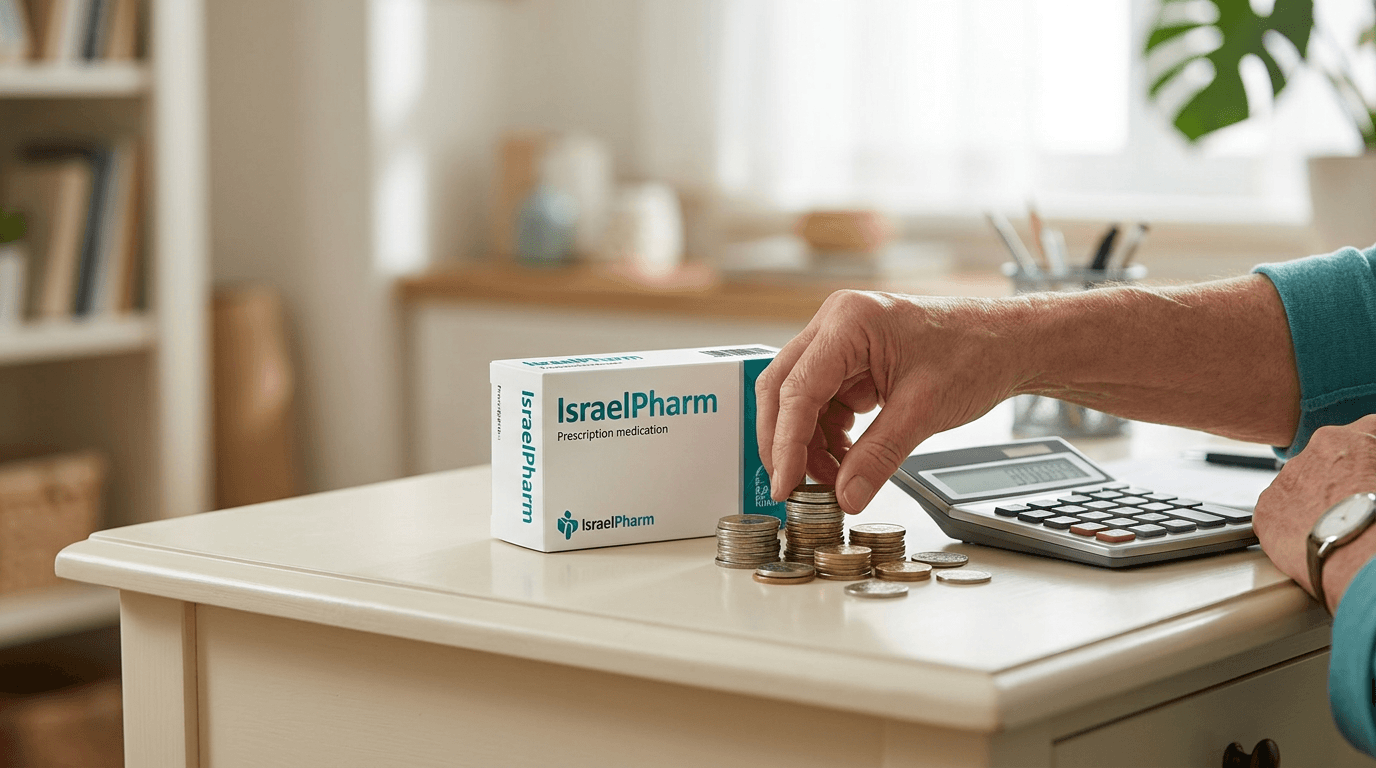
When done through a registered and licensed pharmacy like IsraelPharm, international sourcing is transparent and traceable. It allows employers to purchase standard generic and branded medications at significantly lower costs while maintaining regulatory oversight and quality assurance.
Among internationally regulated sourcing options, Israel has emerged as a particularly stable and transparent provider. Israel’s national pharmaceutical pricing framework sets government-approved maximum prices, mandates periodic price reductions, and tightly regulates pharmacy and distribution margins. This creates a predictable, compliance-driven environment that contrasts sharply with the volatility of U.S. retail drug pricing.
IsraelPharm operates within this regulated system and has extensive experience serving U.S. patients and plan sponsors seeking compliant cross-border solutions. Its model emphasizes:
-
- Dispensing through a fully licensed, nationally regulated pharmacy, with professional, trained pharmacists overseeing the process.
- Sourcing from authorized manufacturers and distributors with full product traceability.
- English-language labeling and pharmacist support for continuity of care.
- Validated international logistics and temperature-controlled shipping where required.
- Familiarity with employer and self-funded plan needs.
For benefit managers, the objective is not to replace domestic pharmacy networks, but to introduce a complementary supply channel capable of reducing acquisition costs. When structured appropriately, this approach can deliver meaningful savings while maintaining safety, product integrity, and consumer confidence.
In this context, IsraelPharm can be not just an overseas vendor, but a strategic partner in long-term pharmacy cost management.
Key factors for businesses to consider when selecting alternate drug supply sources
Insurers have to look for sources that closely match American standards in terms of quality, safety, availability and control. This means that potential suppliers must already be operating as licensed pharmacies within tightly regulated national healthcare systems under continuous government oversight. The products they supply have to be manufactured, stored, and distributed under strict good manufacturing and good distribution practice standards. The key elements that distinguish such “Tier 1” sources are:
-
- Legitimacy – Operation under a recognized national regulator.
- Dependability – Consistent inventory and fulfillment timelines.
- Reliability – Validated logistics for sensitive medicines.
- Quality – Traceable sourcing from authorized manufacturers.
- Transparency – Clear documentation and pharmacist support.
Key takeaway for decision-makers
The newly introduced PBM reforms are not only about one element of the supply chain. They signal a shift in how prescription drugs are going to be priced, paid for, and delivered. Transparency in pricing is now a core expectation, and the advantages offered by international drug sourcing should mean that strategies will have to be evaluated from a new starting point.