 Eczema, known also as atopic dematitis, is more than a single skin condition, but is a broad term that deals with several ailments, all of which affect the skin , causing dry, itchy and inflamed skin. Other common types are contact dermatitis and dandruff (seborrheic dermatitis).
The typical features of all the different forms are:
- Areas of skin that are inflamed, dry and cracked, oozing and crusting, red, itching, or bumpy
- For most sufferers, eczema is triggered by an allergic reaction, so environment and season play a significant role
- There may also be a genetic factor so if someone related already has eczema, the chance of developing it at some point is elevated
- Eczema is a chronic condition that can lie redundant for a long time, but flare up from time-to-time
- There is no cure for eczema, but there are several good treatment options, such as Elocon, Elidel, Futicort, Finacea (Azelex/Skinoren) and Protopic creams. More recent treatments have been using oral medications that are JAK-1 inhibitors off-label
- It’s not contagious, so you can’t catch eczema or give it to anyone
- Behavioral triggers, like stress and anxiety, can cause flare-ups
- Some systemic diseases, like Parkinson’s and HIV, may cause eczema
- Some medicines, like lithium (used to treat depression), can trigger a bout of eczema.
You can learn more about the new treatments for eczema here.
How prevalent is eczema?
There are no precise figures yet, but some surveys find that nearly one in every ten people in the US will have some form of eczema at some stage in their lives. As well, it’s not restricted to a particular age group, but it can even affect newborns as well as kids, teenagers and adults of all ages. There is also a wide spectrum of symptoms, and the degree of effects ranges from mild to severe. More importantly, no complete cure has been found so far, so the available treatments will only reduce symptoms and lessen the frequency of incidence.
There are some particular stages in the life cycle where people may be especially vulnerable either to the onset of the condition or to what are called “flare-ups”, when dormant conditions return or milder states become more aggressive.
- Young children with eczema may subject affected areas of their skin to excessive scratching, leading to blisters and skin infections. As they go through their hormonal changes, teenagers can develop forms of eczema along with other skin conditions like acne.
- Adult eczema most commonly develops either in the twenties, or for women and men over the age of fifty as a by-product of menopause and andropause, respectively.
What are the skin conditions classified as eczema?
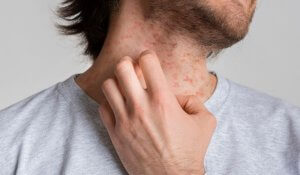
Eczema is more than a single skin condition. Eczema is a form of dermatitis that comes from some allergic reaction in the skin. It causes itchy red skin or patches of discolored skin. Constant scratching can damage the outer layers of the skin and lead to infection, scarring, and thickening.
It may come from a genetic variation that leaves skin with a weak barrier function. Bacteria, irritants and environmental molecules can trigger the allergic reaction. Too much S. aureus on the skin also displaces helpful bacteria and can weaken the skin’s barriers.
- Atopic dermatitis is the most common form of dermatitis.“Atopic” means that it’s an allergy coming from heightened immune responses to common allergens, especially inhaled and food allergens. This allergy can have other effects on the body, like asthma and hay fever, and many people have all three conditions
- Contact dermatitis is triggered by a different kind of immune system reaction, usually when an irritating chemical or other substance touches the skin. As well as itching and reddening, it can cause blisters and hives (itchy bumps), which may leave scars and thickening
- Seborrheic dermatitis shows up with skin patches that produce flakes resembling dandruff. It mostly appears in areas of the body with more oil-producing (sebaceous) glands, such as the hairline, scalp, upper back and chest, armpits, upper face, under the breasts, and groin.
- It sometimes discolors the skin, making the patches lighter in dark-colored skin or darker in lighter skin. It is usually called a “cradle cap” when it appears on the scalp of newborns. In teens and adults, it will most likely be cyclic, more with seasonal bouts, flaring up when the air turns cold and dry.
- The trigger is an inflammatory reaction when sebaceous glands overproduce their oil. This allows an organism that lives on the skin’s surface (Malassezia yeast) to multiply out of control. The abundance of these organisms may not be a direct cause of dermatitis. Instead, it is believed to interfere with normal immune pathways resulting from increased sebum levels. This leads to an immune system reaction that causes skin changes.
- Vitiligo is a condition where pale white patches develop on the skin due to skin pigment (melanin) destruction. The areas of pale skin can turn pink and itchy but usually do not cause discomfort, except if they are exposed to excess sunlight. There are two forms of vitiligo:
- Non-segmental (bilateral or generalized) vitiligo is the most common form. It is believed to be an autoimmune condition in which the immune system has destroyed the skin cells that make melanin in many locations on the body
- Segmental (unilateral or localized) vitiligo, which is more common in children, in which the white patches only affect one area of the body
FAQ
What is dermatitis?
Eczema is more than a single skin condition. Eczema is a catch-all word that covers several similar but distinct skin conditions that share cause-and-effect features and are labeled as dermatitis. The main shared effect is changes in the derma (outer skin layer), producing patches of skin that can be inflamed, discolored, itchy, bumpy, dry, split or blistery.
The primary cause of all these conditions is an immune system reaction to a substance that is recognized as foreign. Sometimes, the substance comes from outside the body. In others, the immune system fails to recognize the body’s cells and attacks them in an autoimmune response.
With atopic dermatitis, the person has an allergy to some substance, and the immune system reacts when it is encountered.
If a part of the body touches a substance to which the immune system is sensitive, there may be a more localized reaction called contact dermatitis.
Two less common forms are autoimmune reactions, such as seborrheic dermatitis and vitiligo. They arise when the immune system reacts somehow to the body’s functions and starts to kill normal skin cells.
How common is dermatitis?
Different sources give varying answers to this question. According to one survey referenced on the National Eczema Association website, in general, about one person in every ten (10%) in the US will experience some form of eczema at some stage of their lives. According to this source, the proportion may be higher in some population groups, such as Native Americans, Asians or Pacific Islanders.
A blog published by the Federal Government’s own National Institute of Allergy and Infectious Diseases gives the number for the US population at some point developing atopic dermatitis alone as 30%.
Another survey published by the Asthma and Allergy Foundation of America puts the ratio for US adults as 7.3% of the population.
At this stage, there is no reliable answer to this question. Hopefully, more research into causes and treatments is ongoing, and we will be able to give a better explanation soon. Watch this space!
What does it mean when the white spots on vitiligo turn red?
The main effect of vitiligo is to eliminate the coloration coming from melanin-producing cells (melanocytes). It turns the skin white either widely across the body (bilateral or generalized vitiligo) or in just one area (unilateral or localized vitiligo). Once the cells that make melanin are destroyed, it is highly unusual for any color to return. However, even short exposure to bright sunlight or ultraviolet light can burn the subcutaneous layers of cells that generally rely on melanin to shield them. The skin in those exposed areas may turn pink.
Is it possible to have both psoriasis and eczema?
Psoriasis is a skin condition with some of the same features as eczema. However, it is distinct and has different causes, treatments and outcomes. An experienced dermatologist can quite easily distinguish between the two conditions. Psoriasis very rarely occurs in children, whereas the majority of cases of dermatitis occur in younger people. Also, psoriasis is a disease that increases the rate at which the skin creates new cells. A doctor can usually make an accurate determination with a relatively simple visual examination.
Studies suggest that when a person has either atopic eczema or psoriasis, the chances of also getting the other condition simultaneously is only about one in fifty (2%).
How does sunlight affect eczema?
The effect of direct sunlight varies from person to person affected by dermatitis. Also, it depends on the type of eczema they have. In some cases of atopic dermatitis and contact dermatitis, short exposure to sunlight or ultraviolet light can have a beneficial effect. But for people with vitiligo, the complete lack of melanin makes the skin highly sensitive to even short bursts of sunlight.
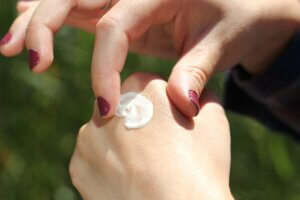
Generally, people with eczema should avoid too much direct sunlight on the affected areas. Another vital caveat regarding sunlight is choosing a sunscreen that does not irritate the skin or trigger a different immune reaction. It’s a good idea to discuss this with your doctor or pharmacist before using new sunscreens.