Login

Fast Delivery

Ships from Israel

Secure Payment
Genuine Brands
Pharmacist Oversight
Proudly Israeli
Free Shipping on orders over $99*
Spend $99, get free U.S. shipping*
Tel: 1-866-456-3768 Fax: 1-866-544-8993
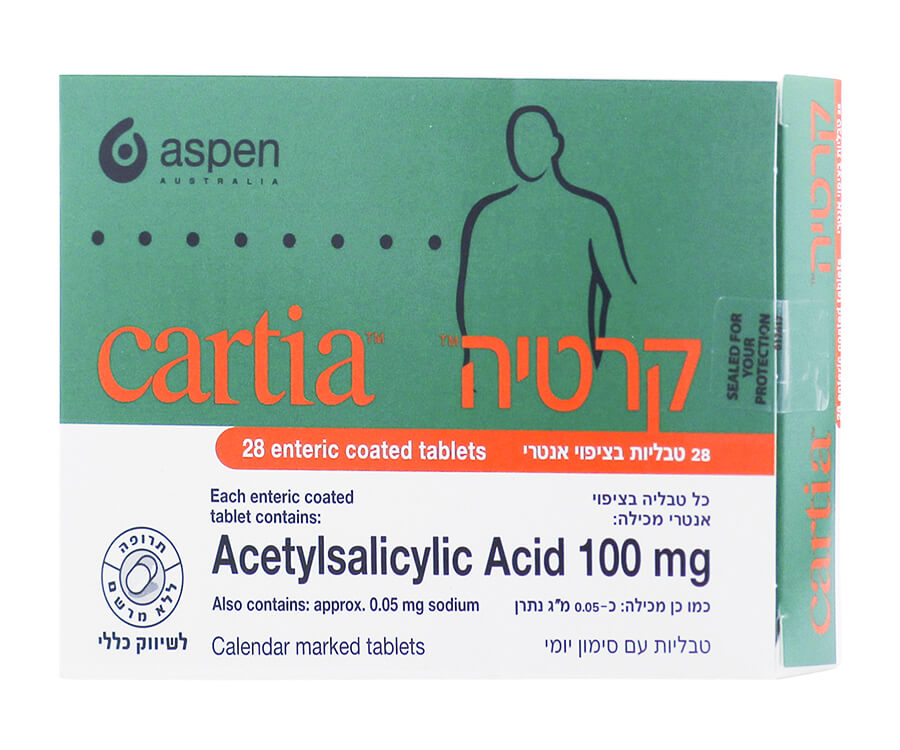
For visual reference only; actual product may vary
US Name:
Aspirin
Alternative Names:
Cartia, Micropirin
Active Ingredients:
Acetyl Salicyclic Acid
Brand Manufacturer:
GSK
Manufacturer Location:
Australia
Click here to view Product Insert
For visual reference only; actual product may vary
Low-dose Aspirin, with the active ingredient Acetylsalicylic Acid, is a daily medication used to make blood less likely to clot. It’s prescribed to help prevent strokes and heart attacks in high-risk individuals by inhibiting platelets, the blood cells that cause clotting. Order this crucial preventative medicine from IsraelPharm.
| Cartia Brand | 100mg 28 Tablets |
-
|
Our price: $21.00 |
|
| Micropirin Generic | 100mg 30 Tablets |
-
|
Our price: $21.00 |
|
| Micropirin Generic | 75mg 30 Tablets |
-
|
Our price: $21.00 |
Aspirin is an over-the-counter medication whose active ingredient is Acetylsalicylic Acid. While it’s widely known for relieving pain and reducing fever, in a low-dose form, its primary role is to prevent cardiovascular events. By making the blood less sticky, it helps stop blood clots from forming that could lead to a heart attack or stroke. It belongs to a class of drugs called salicylates and also has anti-inflammatory properties, making it one of the most versatile medicines available today.
Aspirin works by permanently blocking a natural substance in your body called cyclooxygenase (COX), an enzyme that is involved in many processes. In its antiplatelet capacity, Aspirin stops the production of thromboxane A2 in platelets. Platelets are small blood cells that stick together to form clots. By inhibiting their ability to clump together, low-dose aspirin reduces the risk of forming a dangerous clot in your blood vessels, thereby protecting against heart attacks and ischemic strokes.
Low-dose Aspirin is for patients who are at a higher risk of experiencing a cardiovascular event and have been advised by their doctor to take it. This typically includes individuals who have already had a heart attack or an ischemic stroke to prevent a second one from occurring. It may also be recommended for people with stable or unstable angina (chest pain), or for those who have undergone procedures like coronary artery bypass surgery or stent placement to keep the vessels open.
Aspirin should be taken exactly as prescribed by your healthcare provider, typically as a low dose once per day for cardiovascular protection. To minimize the risk of stomach upset, it is often recommended to take the tablet with a full glass of water, and it can be taken with or without food. Taking it with food may help reduce potential gastrointestinal discomfort. Do not crush or chew enteric-coated tablets, as they are designed to protect your stomach by dissolving in the intestine.
The most common side effects of aspirin involve the digestive system, such as stomach upset, heartburn, or indigestion. Because it affects blood clotting, it can also increase your risk of bleeding, which might manifest as easy bruising or longer bleeding from cuts. More serious side effects include stomach ulcers, significant gastrointestinal bleeding (visible as black, tarry stools or vomiting blood), and allergic reactions like hives or swelling. Always discuss any side effects with your doctor.
At IsraelPharm, we provide you with access to affordable, authentic medications like Aspirin, sourced from reliable manufacturers. We believe that preventative care shouldn’t be a luxury. Our straightforward ordering process, dedicated customer service team, and competitive pricing ensure you can manage your health proactively without financial strain. By choosing us, you get the double benefit of a trusted pharmacy partner and prices that make your long-term health goals achievable and sustainable.
Common Side Effects:
Less Common but Serious Side Effects:
If you experience any serious side effects, seek medical attention immediately.
Low-dose aspirin is primarily used for:
At higher doses, aspirin can be used to treat mild to moderate pain, reduce fever, and decrease inflammation.
Some studies suggest that taking aspirin at bedtime may be more effective for cardiovascular protection, but the most important thing is consistency. The best time to take it is the time you are most likely to remember. Taking it with your evening meal can also help reduce the risk of an upset stomach. Always follow your doctor's specific advice on timing.
Yes, it's generally a good idea to take aspirin with food or a full glass of water. This helps coat the stomach and can reduce the risk of common side effects like stomach upset, pain, or heartburn. Enteric-coated versions are designed to be gentler on the stomach, but taking them with food is still a reasonable precaution.
If you miss a dose of your daily low-dose aspirin, take it as soon as you remember. However, if it is almost time for your next dose, just skip the missed dose and resume your regular schedule. Do not take two doses at the same time to make up for a missed one, as this can increase your risk of side effects like bleeding.
You should use caution when drinking alcohol while on a daily aspirin regimen. Both alcohol and aspirin can increase your risk of stomach irritation and bleeding. Heavy or regular drinking can significantly elevate this risk. It's best to discuss your alcohol consumption with your doctor to understand the personal risks involved and to determine what is safe for you.
Yes, aspirin is considered a type of blood thinner. However, its technical function is as an antiplatelet agent. This means it works by making platelets—the tiny cells that form clots—less sticky. This prevents them from clumping together in your arteries and causing a heart attack or stroke. Other blood thinners, like anticoagulants, work through different mechanisms.
Aspirin can interact with several other medications. You should be especially cautious if you also take other blood thinners (like warfarin or clopidogrel), other NSAIDs (like ibuprofen or naproxen), or certain antidepressants (SSRIs/SNRIs). These combinations can significantly increase your risk of bleeding. Always provide your doctor with a full list of your medications, including over-the-counter drugs and supplements.
Low-dose aspirin (typically 81 mg) is used for its antiplatelet effects to prevent heart attacks and strokes. Regular strength aspirin (usually 325 mg) is primarily used for pain relief, fever reduction, and to lessen inflammation. Taking a higher dose does not provide better cardiovascular protection and significantly increases the risk of side effects like gastrointestinal bleeding.
Aspirin should be stored at room temperature, away from excess heat and moisture. Do not store it in the bathroom, where humidity can degrade the medication and cause it to break down into other chemicals, which can be harmful. Keep the bottle tightly sealed and out of the reach of children and pets to ensure both safety and effectiveness.
No, you should not stop taking daily aspirin suddenly without first consulting your doctor. Abruptly discontinuing aspirin therapy, especially if you're taking it to prevent a heart attack or stroke, can lead to a 'rebound' effect. This may increase your risk of blood clots, potentially leading to the very cardiovascular event you were trying to prevent.
For pain relief, aspirin usually starts working within 30 to 60 minutes. However, for its primary purpose in low-dose therapy—preventing blood clots—its antiplatelet effects begin very quickly, inhibiting platelet function within an hour of the first dose. The protective benefit for your cardiovascular system is built up over long-term, consistent daily use as prescribed by your doctor.
Yes, one of the most significant risks of long-term aspirin use is stomach bleeding. Aspirin can irritate the lining of your stomach, which can lead to gastritis, ulcers, and bleeding. The risk is higher with larger doses and in older adults. Signs of stomach bleeding include black stools or vomiting blood. Report any such symptoms to your doctor immediately.
An allergy to aspirin can be serious. Symptoms may include hives, itchy skin, a runny nose, and watery eyes. In more severe cases, it can cause asthma-like symptoms (wheezing, coughing, shortness of breath) or a life-threatening reaction called anaphylaxis, which involves facial swelling and severe breathing difficulty. If you suspect an allergic reaction, seek emergency medical help.
Send Your Prescription
No Hidden Fees
Typically Under 10 days

IsraelPharm has been delivering lost cost prescriptions from Israel for over 15 years worldwide. Daily flights allow us to get your medications dispatched fast! Delivery to the USA is under 10 days and you can track and trace every order.