 For individuals with type 2 diabetes, managing the condition is often a balancing act that extends beyond blood sugar control to protecting vital organs. One of the most significant long-term risks is chronic kidney disease (CKD), a progressive condition that can lead to serious complications. A medication called Kerendia (finerenone) is changing the landscape of treatment. Originally approved for CKD in type 2 diabetes, compelling new evidence shows Kerendia effectively preserves kidney function and reduces cardiovascular risk in a much wider group of patients, establishing it as a foundational therapy for CKD.
The challenge of chronic kidney disease
Chronic kidney disease affects approximately one in ten people across the globe. For those with type 2 diabetes, the numbers are even more concerning, with diabetes being a leading cause of kidney failure. The kidneys are essential for filtering waste and excess fluids from the blood, but sustained high blood sugar can damage these delicate filters over time.
- Even with established treatments like ACE inhibitors and SGLT2 inhibitors, many patients still face a high residual risk of their kidney function declining and developing cardiovascular problems.
- When CKD progresses, the risk of heart failure, heart attack, stroke, and death escalates dramatically.
- This highlights a critical need for therapies that address the underlying mechanisms of damage not fully covered by existing medications.
How Kerendia works: A different mechanism of action
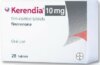 Kerendia is a first-in-class non-steroidal mineralocorticoid receptor antagonist (MRA). This sounds complicated, but the concept is fairly straightforward. In people with CKD and type 2 diabetes, a hormone receptor called the mineralocorticoid receptor (MR) becomes overactivated. This overactivation is a key driver of inflammation and fibrosis (scarring) in the kidneys and heart.
- Think of the MR as an amplifier for pro-inflammatory and pro-fibrotic signals. Kerendia works by selectively blocking this receptor, effectively turning down the volume on the signals that cause damage.
- Older, steroidal MRAs like spironolactone also block this receptor, but less selectively. They often come with a higher risk of side effects like hyperkalemia (high potassium levels) and hormonal effects.
- Kerendia’s unique structure allows it to bind to the MR with high potency and selectivity, offering powerful anti-inflammatory and anti-fibrotic effects with a more favorable safety profile. It was designed specifically to protect the heart and kidneys.
How Kerendia preserves kidney function and protects the heart
The evidence supporting Kerendia comes from a series of large, well-conducted clinical trials. The initial FIDELIO-DKD and FIGARO-DKD trials established its benefits in patients with CKD and type 2 diabetes, but recent findings have broadened its potential impact significantly. These studies show that adding Kerendia to standard care provides crucial protection.
- Slows CKD progression: A pooled analysis of the major trials, named FIDELITY, showed that Kerendia reduced the risk of a composite kidney outcome (kidney failure, sustained decrease in kidney function, or renal death) by 23% compared to placebo. It effectively preserves kidney function over the long term.
- Reduces cardiovascular events: The same analysis found Kerendia lowered the risk of cardiovascular events (cardiovascular death, non-fatal heart attack, non-fatal stroke, or hospitalization for heart failure) by 14%. The reduction in hospitalizations for heart failure was particularly strong, at 22%.
- Benefits extend to non-diabetic CKD: The new FIND-CKD trial specifically studied patients with chronic kidney disease who did not have diabetes. The results were remarkable, showing that Kerendia significantly slowed kidney function decline and reduced the risk of kidney failure, heart failure, and cardiovascular death. This demonstrates its benefits are not limited to diabetic kidney disease.
Using Kerendia: Dosing and what to expect
Kerendia is an oral tablet taken once daily. Treatment should always be managed by your healthcare provider, who will determine the appropriate dose for you based on your kidney function and potassium levels. Your doctor will monitor you throughout your treatment.
- Starting dose: The initial dose depends on your estimated glomerular filtration rate (eGFR), a measure of kidney function. Patients with an eGFR of 60 or higher typically start at 20 mg, while those with an eGFR between 25 and 60 start at 10 mg.
- Monitoring: Your doctor will check your potassium and eGFR levels within four weeks of starting Kerendia and after any dose adjustments. This is crucial because the main side effect of concern is hyperkalemia (high blood potassium).
- Side effects: While generally well-tolerated, hyperkalemia can occur. The risk is lower than with older MRAs, and instances of stopping treatment due to high potassium were low in clinical trials. Other potential side effects include low blood pressure and hyponatremia (low sodium).
- Treatment continuity: As a long-term therapy designed to slow disease progression, maintaining a reliable supply of Kerendia is essential. Sourcing medication through an established licensed pharmacy like IsraelPharm ensures you can maintain your treatment schedule without interruption, which is vital for achieving the full protective benefits. As always, your treatment plan remains under the complete supervision of your local physician.
Kerendia in context: A comparison of CKD treatments
| Treatment | How it works | Pros | Cons | Typical use |
|---|---|---|---|---|
| Kerendia (finerenone) | Non-steroidal MRA that blocks MR overactivation, reducing inflammation and fibrosis. | Targets inflammation and fibrosis directly. Reduces both kidney and cardiovascular risk. Lower hyperkalemia risk than older MRAs. | Requires potassium monitoring. Not recommended for severe kidney impairment (eGFR <25). | Added to standard care for patients with CKD (with or without type 2 diabetes) to slow progression and reduce cardiovascular events. |
| ACE inhibitors / ARBs | Block the renin-angiotensin system to lower blood pressure and reduce pressure inside the kidneys. | Proven to slow CKD progression. Widely available and foundational to treatment. | Can cause a cough (ACEi) or hyperkalemia. Do not fully address inflammatory pathways. | First-line therapy for hypertension and proteinuria in patients with CKD and diabetes. |
| SGLT2 inhibitors | Block glucose reabsorption in the kidneys, leading to glucose excretion in urine. Also reduces pressure within the glomeruli. | Strongly reduce progression of CKD and risk of heart failure. Also provide glycemic control in diabetes. | Can cause genital yeast infections and, rarely, diabetic ketoacidosis. | A foundational pillar of therapy for CKD, particularly in patients with type 2 diabetes or heart failure. |
| Steroidal MRAs (e.g., spironolactone) | Older mineralocorticoid receptor antagonists. | Reduce blood pressure and fluid retention. Have some kidney-protective effects. | Higher risk of hyperkalemia and hormonal side effects (e.g., gynecomastia) compared to Kerendia. | Mainly used for resistant hypertension and heart failure; less common for primary kidney protection due to side effects. |
How to access the benefits of Kerendia through IsraelPharm
Recent studies have solidified Kerendia’s role as a key therapy for slowing kidney function decline and protecting the heart in patients with chronic kidney disease. For those prescribed this important long-term treatment, securing a reliable and affordable supply is paramount. IsraelPharm provides a trusted pathway for accessing this medication.
As a licensed international pharmacy, IsraelPharm operates under strict regulatory oversight, ensuring the legitimacy and quality of every medication dispensed. We supply the exact brand-name Kerendia prescribed by your doctor, not a substitute, ensuring continuity of care. This is especially important for a daily medication where treatment consistency is key to achieving the protective benefits shown in clinical trials. A valid prescription from a licensed physician is required.
Patients on long-term treatment programs can achieve meaningful cost savings over the full course of their therapy, as medications sourced through IsraelPharm are priced significantly lower than US retail rates. You can order up to a three-month supply at a time, and it will be delivered directly to your home, removing the stress of managing local pharmacy stock and repeat visits.
Further reading
- Effect of Finerenone on Chronic Kidney Disease Outcomes in Type 2 Diabetes: The New England Journal of Medicine
- Cardiovascular Events with Finerenone in Kidney Disease and Type 2 Diabetes: The New England Journal of Medicine
- Information on Finerenone: MedlinePlus
- Cardiorenal benefits of finerenone: protecting kidney and heart: National Center for Biotechnology Information (NCBI)
- Chronic Kidney Disease meds: IsraelPharm
- Coming to Terms With Chronic Kidney Disease: IsraelPharm blogs
Frequently asked questions about Kerendia
How does Kerendia protect the kidneys?
Kerendia directly targets and blocks the overactivation of the mineralocorticoid receptor (MR). This overactivation drives inflammation and fibrosis, which are two key processes that cause scarring and damage in the kidneys over time. By selectively inhibiting the MR, Kerendia reduces these harmful effects. This unique mechanism is what allows Kerendia to preserve kidney function and slow the progression of chronic kidney disease, working in a way that is complementary to other medications like ACE inhibitors or SGLT2 inhibitors.
What are the most important side effects of Kerendia?
The most significant side effect of Kerendia is hyperkalemia, which means having high levels of potassium in the blood. For this reason, your doctor will monitor your potassium levels when you start the medication and after any dose changes. While this side effect is a primary concern, the risk with Kerendia is notably lower than with older steroidal MRAs. Other less common side effects can include hypotension (low blood pressure) and hyponatremia (low sodium levels). Always discuss potential side effects with your healthcare provider.
How is Kerendia dosed?
Kerendia is taken as a once-daily tablet. The starting dose is based on your kidney function, specifically your estimated glomerular filtration rate (eGFR). Your doctor will typically start you on either a 10 mg or 20 mg dose. After about four weeks, your doctor will re-check your blood potassium levels and may adjust the dose to the target of 20 mg per day if it is safe to do so. It is crucial to follow your doctor’s instructions precisely and not change the dose on your own.
Can I use Kerendia if I don’t have diabetes?
Yes, recent clinical evidence has shown that the benefits of Kerendia extend to patients with chronic kidney disease even without type 2 diabetes. The FIND-CKD trial demonstrated that Kerendia was effective in slowing kidney function decline and reducing cardiovascular risks in a non-diabetic CKD population, including those with glomerular diseases. This expands its use beyond its original indication and establishes Kerendia as a foundational therapy for a wider range of patients with chronic kidney disease. Your doctor can determine if it’s right for you.
Is Kerendia better than Spironolactone?
Kerendia and spironolactone are both mineralocorticoid receptor antagonists, but they belong to different classes. Kerendia is a non-steroidal MRA, while spironolactone is a steroidal MRA. The key advantages of Kerendia are its higher selectivity for the MR and its unique binding properties, which lead to potent anti-inflammatory effects with a lower risk of side effects. Specifically, Kerendia has a lower incidence of hyperkalemia (high potassium) and does not cause hormonal side effects like gynecomastia (male breast enlargement) that can occur with spironolactone.
How can I source Kerendia for ongong treatment?
Once your doctor provides a prescription for Kerendia, you can source it through a licensed international pharmacy like IsraelPharm. This is a common and reliable method for accessing medications for long-term treatment. IsraelPharm requires a valid prescription from your physician and dispenses the exact brand-name medication. The process is designed for continuity, allowing you to order a supply for up to three months that is delivered directly to your home, ensuring your treatment is not interrupted by local stock shortages or other issues.
Glossary
Albuminuria: The presence of albumin, a type of protein, in the urine, indicating kidney damage.
Chronic Kidney Disease (CKD): A condition characterized by the gradual loss of kidney function over time.
eGFR (estimated Glomerular Filtration Rate): A test that measures the level of kidney function and determines the stage of kidney disease.
Fibrosis: The thickening and scarring of connective tissue, a key process in the progression of kidney damage.
Glomerular diseases: A group of conditions that damage the kidneys’ filtering units, often due to immune system issues.
Hyperkalemia: A medical condition characterized by an abnormally high level of potassium in the blood.
Mineralocorticoid Receptor (MR): A receptor that, when overactivated, drives inflammation, fibrosis, and damage in the kidneys and heart.
Non-steroidal Mineralocorticoid Receptor Antagonist: A class of drugs that blocks the mineralocorticoid receptor without a steroid structure, reducing certain side effects.