 Menopause hormone therapy (MHT) is a new term for what used to be called hormone replacement therapy or HRT. If you’ve never heard about menopause hormone therapy, it’s worth remembering that the change of name from “hormone replacement therapy” is more of a paint job than any substantial change in the actual concept of treatment for women in menopause.
Following decades of warnings that HRT was unsafe, regulators required manufacturers to insert a “black box” warning that estrogen increases the risk of cardiovascular disease, breast cancer, and probable dementia. Warnings like these transformed into a vast residue of negative information on social media platforms that flagged HRT as something to be avoided despite all of its proven benefits. In mid-2025, the FDA convened a panel of experts in the area of female health to discuss removing the black-box warning label on vaginal estrogen products. The decision was announced that it would remove this language from all hormone therapy products. As we will make clear in this article, experts now agree that HRT has been safe all along, and the negative image was the result of a misinterpretation of old studies that were themselves based on a flawed sample of the population. HRT – or as it’s now been labeled – MHT, is safe for most women who do not have specific risk factors, with the important caveat that treatment should be started before age 60
For women who have been managing menopause symptoms with hormone therapy for some time, the shift from HRT to MHT can feel confusing, even unsettling. The change is mostly a relabel: what was long called hormone replacement therapy is now widely referred to as menopause hormone therapy, or MHT. The treatment itself has not been pulled out from under anyone, and current therapies remain a valid choice for most women who are on them. Newer research, including a large Danish cohort study, is reshaping how doctors talk about long-term safety, and a handful of newer products have widened the menu of options.
This article walks through what menopause hormone therapy is now understood to do, how the evidence has matured, and where newer treatments fit alongside the established ones. The aim is reassurance grounded in facts, not a push to change anything that is already working.
Why the name changed from HRT to MHT
The older name, hormone replacement therapy, suggested that menopause is a deficiency state in need of correction. Many specialists felt that framing was misleading. Menopause is a natural life stage, not an illness, and the hormones used in treatment supplement what the body produces less of rather than fully replacing anything. The newer label, menopause hormone therapy, is meant to reflect that more honestly.
The change also gives the field a clean break from a long shadow cast by older studies, particularly the 2002 Women’s Health Initiative trial. That trial alarmed millions of women, and their doctors, and prescriptions dropped sharply in the years that followed. The shift from HRT to MHT is, in part, an effort to reset that conversation with up-to-date evidence in mind.
What the latest research into menopause is showing 
The reassuring news for women already on treatment is that recent population-scale evidence has been kind to menopause hormone therapy. A nationwide Danish cohort study followed roughly 877,000 women born between 1950 and 1977, with a median follow-up of 14.3 years. Around 12% of those women had filled at least one prescription for HRT during the study period.
The headline finding is that hormone replacement therapy was not linked to higher overall mortality. After adjustment for age, calendar year, and a range of health factors, women who used MHT had a slightly lower risk of death than those who did not. There were no clear differences in cancer-specific or cardiovascular-specific mortality between users and non-users. Among the smaller group of women who had both ovaries removed between ages 45 and 54, MHT users had a 27 to 34 percent lower risk of death than women in the same situation who did not use it.
The picture from the Danish data lines up with what menopause specialists have been saying for some years. For women who start treatment before age 60 or within ten years of menopause onset, the benefits typically outweigh the risks. The older safety alarms reflected studies done largely in women in their sixties, on hormone formulations that have since been refined.
What menopause hormone therapy actually does
The transition from HRT to MHT has not changed how the medicines work. The therapy supplements estrogen, which drops sharply during menopause and is responsible for many of its symptoms. Where a woman still has her uterus, a progestogen is added to protect the lining of the uterus from the effects of estrogen alone. Women who have had a hysterectomy can usually take estrogen-only therapy.
For women already on treatment, menopause hormone therapy continues to do the heavy lifting on the most disruptive symptoms:
- Hot flashes, night sweats, and flushing.
- Disturbed sleep and the irritability that often follows it.
- Vaginal dryness and discomfort during intimacy.
- Changes in bladder control and urinary frequency.
Beyond symptom control, ongoing MHT use is associated with reduced bone loss and a lower risk of fractures, with supportive evidence for cardiovascular health when started at the right time. As always, treatment decisions belong with a healthcare provider who knows the full medical history.
Where newer MHT options fit alongside established treatment
One of the welcome developments since the early HRT era is that the range of offerings has widened. Women who are doing well on their current regimen do not need to switch, but it helps to know what else exists in case symptoms change or side effects become bothersome. Three options worth knowing about are Vagifem (estradiol vaginal tablets), AndroFeme (testosterone cream for women), and Veozah (fezolinetant).
Vagifem delivers a low dose of estrogen directly to the vaginal tissues. It targets vaginal dryness, vaginal discomfort, and related urinary symptoms without the systemic exposure of whole-body estrogen. It is often used alongside or instead of systemic therapy when genitourinary symptoms are the main concern.
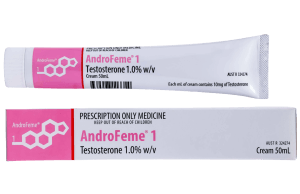
AndroFeme is a testosterone cream developed for women. Testosterone is part of the female hormone picture too, and levels also fall around menopause. Some women on standard MHT continue to experience low libido or persistent fatigue, and a low-dose testosterone cream is sometimes added on specialist advice.
Veozah is a different kind of medicine altogether. It is a non-hormonal option that targets the brain pathway involved in hot flashes. For women who cannot or prefer not to take hormones, or who still get vasomotor symptoms despite estrogen, Veozah opens a door that did not exist a few years ago.
Comparing the options
| Treatment | How it works | Pros | Cons | Typical use |
|---|---|---|---|---|
| Systemic estrogen, with or without progestogen | Supplements estrogen body-wide; progestogen protects the uterine lining when needed. | Most effective overall for hot flashes, night sweats, sleep, mood, and bone health. | Not suitable for women with certain cancers, clotting history, or liver disease. | Standard menopause hormone therapy for women within ten years of menopause onset. |
| Vagifem (estradiol vaginal tablets) | Releases low-dose estrogen locally inside the vagina with minimal systemic absorption. | Targets dryness, vaginal discomfort, and bladder symptoms; lower whole-body risk profile. | Does not treat hot flashes or systemic symptoms; some users notice mild discharge. | Genitourinary symptoms of menopause, alone or alongside systemic therapy. |
| AndroFeme (testosterone cream for women) | Provides a low daily dose of testosterone applied to the skin. | May help libido and energy where estrogen alone has not been enough. | Used off-label for some indications; needs monitoring of blood levels. | Add-on therapy under specialist guidance for persistent low libido. |
| Veozah (fezolinetant) | Blocks a brain receptor (NK3) involved in triggering hot flashes. | Non-hormonal; useful when hormones are not an option or not enough. | Targets vasomotor symptoms only; liver monitoring is recommended. | Moderate to severe hot flashes in women who cannot or prefer not to use hormones. |
Side effects and safety in the MHT era
No medicine is risk-free, and menopause hormone therapy is no exception. The risk profile depends on the type of hormone, the dose, the route, the woman’s age, and how long she has been on treatment. Common side effects of combined therapy can include breast tenderness, headaches, occasional nausea, mood changes, and unexpected vaginal bleeding. Local treatments like Vagifem tend to have a lighter side-effect footprint, mostly limited to local irritation or mild discharge.
The conditions that usually rule out systemic MHT have not changed:
- history of breast, endometrial or hormone-sensitive ovarian cancer
- a clotting disorder
- untreated cardiovascular disease.
Women who started treatment before age 60 and remain symptom-free of these conditions are generally encouraged to continue under their doctor’s review. Any decision to start, stop, switch, or extend therapy belongs with a healthcare provider who can weigh personal history against the latest evidence.
IsraelPharm and the new MHT landscape
For women keeping an eye on the wider treatment scene, IsraelPharm operates as a licensed international pharmacy that stocks the branded products relevant to MHT, including Vagifem, AndroFeme, and Veozah. It can be a useful source of information for readers who want to know the exact branded medicine their doctor might mention, with the knowledge that it is easily obtainable with a valid prescription, without long supply gaps.
How to access menopause replacement therapy through IsraelPharm
For readers whose doctor recommends moving from one form of menopause hormone therapy to another, or who want to be sure their current branded product remains accessible, IsraelPharm provides a straightforward route. The pharmacy stocks most of the latest MHT treatment, including Vagifem, AndroFeme, and Veozah, as the exact branded products prescribed, not generic substitutes.
Patients sourcing menopause hormone therapy through IsraelPharm benefit from reliable access to branded options that can be subject to supply disruptions, home delivery that removes the need for repeat pharmacy visits, and a licensed international pharmacy operating under regulatory oversight. A valid prescription from a licensed physician is required for all prescription medicines.
Readers who want to see what is available, check current pricing on a specific product, or read the product information page can visit the IsraelPharm website. The next step is a conversation with a healthcare provider about whether any change to current treatment is warranted, with IsraelPharm available as a sourcing option once that decision is made.
Further reading
- Options for the move from HRT to MHT – IsraelPharm catalog
- Estrogen Patch Shortage? Here’s how to Get Them – IsraelPharm blogs
- Menopause, Estrogen, and Vaginal Health Explained – IsraelPharm blogs
- Does Menopause Change Who I Am? – IsraelPharm blogs
- Resources on menopause hormone therapy – The Menopause Society
- Research on menopausal hormone therapy and mortality – British Medical Journal
Frequently asked questions about menopause hormone therapy
Is the move from HRT to MHT a change in the medicine itself?
No. The shift from HRT to MHT is mostly a change in name and framing. The medicines used in menopause hormone therapy work the same way as before. Key points:
- The label “menopause replacement therapy” replaces “hormone replacement therapy”.
- The new name reflects that menopause is a life stage, not a disease.
- Existing prescriptions and treatment plans remain valid.
- Newer formulations have improved safety profiles over older ones.
Does Vagifem replace systemic menopause replacement therapy?
Vagifem does not replace systemic therapy for most women. It targets local symptoms only. It is a focused treatment for vaginal and urinary symptoms of menopause.
- Vagifem treats vaginal dryness and vaginal discomfort directly at the source.
- Systemic estrogen is needed for hot flashes, night sweats, and bone protection.
- Some women use Vagifem alongside whole-body menopause hormone therapy.
- A doctor can advise whether a switch or combination makes sense.
Who might consider AndroFeme as part of menopause hormone therapy?
AndroFeme is generally considered for women whose libido or energy has not improved on standard menopause hormone therapy. It is used under specialist advice. Key considerations include:
- Testosterone levels also fall during menopause in many women.
- AndroFeme is applied as a low-dose cream to the skin daily.
- Blood testing is usually advised to monitor levels.
- It is added on, not used in place of standard therapy.
What does Veozah offer that traditional menopause replacement therapy does not?
Veozah is non-hormonal. It blocks a brain pathway involved in triggering hot flashes. This makes it an option for women who cannot or do not wish to use hormones.
- Veozah targets vasomotor symptoms such as hot flashes and night sweats.
- It does not affect estrogen-sensitive tissues like the breast or uterus.
- Liver function tests are recommended during treatment.
- It is not a substitute for the bone or genitourinary benefits of estrogen.
How recent is the evidence supporting menopause replacement therapy safety?
The strongest recent evidence comes from a 2024 Danish cohort study of around 877,000 women followed for a median of 14.3 years. The study found no overall increase in mortality.
- Cancer-specific mortality showed no clear difference between users and non-users.
- Cardiovascular mortality also showed no clear difference.
- Women who had ovaries removed between 45 and 54 had lower mortality on therapy.
- Findings support continued treatment when started at the right age.
Glossary
- Bilateral oophorectomy — A surgical procedure in which both ovaries are removed, often causing immediate menopause regardless of the woman’s age.
- Endometrium — The lining of the uterus that thickens and sheds during the menstrual cycle and can be affected by estrogen.
- Estradiol — The main form of estrogen produced by the ovaries during a woman’s reproductive years and used in many hormone therapies.
- Genitourinary symptoms — Menopause-related changes affecting the vagina, vulva, and urinary tract, including dryness, discomfort, and bladder issues.
- Hazard ratio — A statistical measure comparing how often an event happens in one group versus another over a follow-up period.
- NK3 receptor — A brain receptor involved in regulating body temperature, targeted by Veozah to reduce hot flashes during menopause.
- Progestogen — A hormone or hormone-like medication used alongside estrogen to protect the uterine lining from overgrowth.
- Vasomotor symptoms — Menopause symptoms caused by changes in blood vessel regulation, mainly hot flashes, night sweats, and flushing.