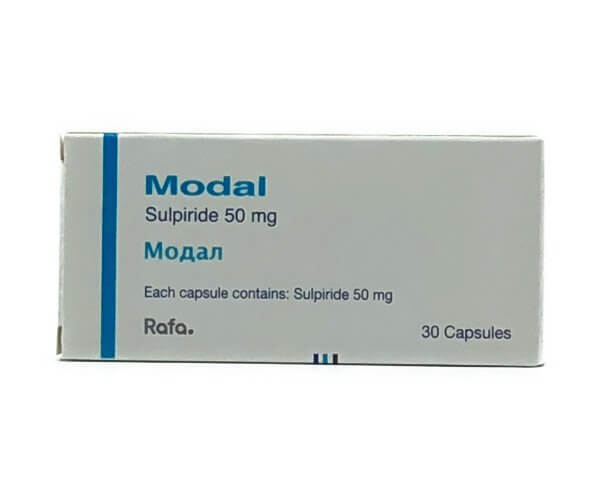
What is Modal?
Modal is an antipsychotic medication containing the active ingredient Sulpiride. It belongs to a class of drugs called benzamides. Modal is primarily prescribed to manage conditions like vertigo. Doctors also use it for pre-psychotic states. The medication helps restore balance to chemicals in the brain. This action improves mood and reduces feelings of dizziness. It is available in different strengths for various needs.
How does Modal work?
Modal works by selectively blocking dopamine D2 receptors in the brain. Dopamine is a chemical messenger (neurotransmitter) that affects mood, movement, and perception. By blocking some of its signals, Modal helps correct imbalances that cause psychiatric symptoms or vertigo. This targeted action helps manage conditions like schizophrenia and depression without causing heavy sedation. It stabilizes mental state and improves overall function.
Who is Modal for?
Modal is for patients who need treatment for specific neurological and psychiatric conditions. It is prescribed for adults experiencing vertigo. It is also suitable for those with pre-psychotic states. For patients with schizophrenia, Modal can be a primary or add-on therapy. The stronger version, Modal Forte, helps people with long-term depression (dysthymia). It also treats apathy in psychiatric patients. This medication is not approved in the US but can be prescribed off-label.
Dosage and administration
Modal dosage is determined by a doctor based on your condition. The specific regimen depends on what you are treating. Always follow your doctor’s instructions carefully. Take the medication exactly as prescribed. If you miss a dose, take it as soon as you remember. However, skip the missed dose if it is almost time for your next one. Never take a double dose. In case of an overdose, seek immediate medical attention.
Symptoms of an overdose may include restlessness and confusion. You might also experience muscle stiffness, spasms, or uncontrolled movements. Reduced consciousness and increased saliva are also signs. If you suspect an overdose, go to the nearest emergency room.
Side effects
Modal can cause side effects, though not everyone experiences them. Most side effects are mild and may disappear over time. If any side effect persists or worsens, you should contact your doctor. It is important to monitor your body’s reaction to the medication.
Common Side Effects
- Dizziness or headache
- Drowsiness or trouble sleeping
- Changes in weight
- Sexual problems
- Nausea or vomiting
- Dry mouth or constipation
Serious Side Effects
You should stop taking Modal and see a doctor immediately if you have involuntary movements. These include tremors, restlessness, or symptoms like Parkinson’s disease. A severe allergic reaction is rare but possible. Symptoms include trouble breathing, pale skin, and a rapid heartbeat. Call for emergency help if this occurs.
Why buy from IsraelPharm?
Buying Modal from IsraelPharm is a convenient and affordable choice. We are a trusted online pharmacy serving the US market. We provide access to medications like Modal that may not be available locally. Our platform ensures you receive genuine medications from reliable sources. We offer competitive pricing to help you save on your prescriptions. Our customer service team is ready to assist you. Enjoy the peace of mind that comes with ordering from a reputable international pharmacy.
Modal is generally well-tolerated, but like all medications, it can cause side effects. Most are mild and manageable. Common side effects may include:
- Dizziness
- Headache
- Somnolence (drowsiness) or insomnia
- Weight changes
- Sexual dysfunction
- Nausea or vomiting
- Nasal congestion
- Dry mouth, constipation, or blurred vision
Stop taking Modal and contact a doctor if you experience involuntary movements like tremors or restlessness. Seek emergency medical help for signs of a severe allergic reaction, such as difficulty breathing, pale skin, or a rapid heartbeat.
Modal is used to manage several medical conditions, including:
- Vertigo
- Pre-psychotic states
- Schizophrenia (as a primary or add-on therapy)
- Persistent depressive disorder (dysthymia)
- Depression and apathy in psychiatric patients