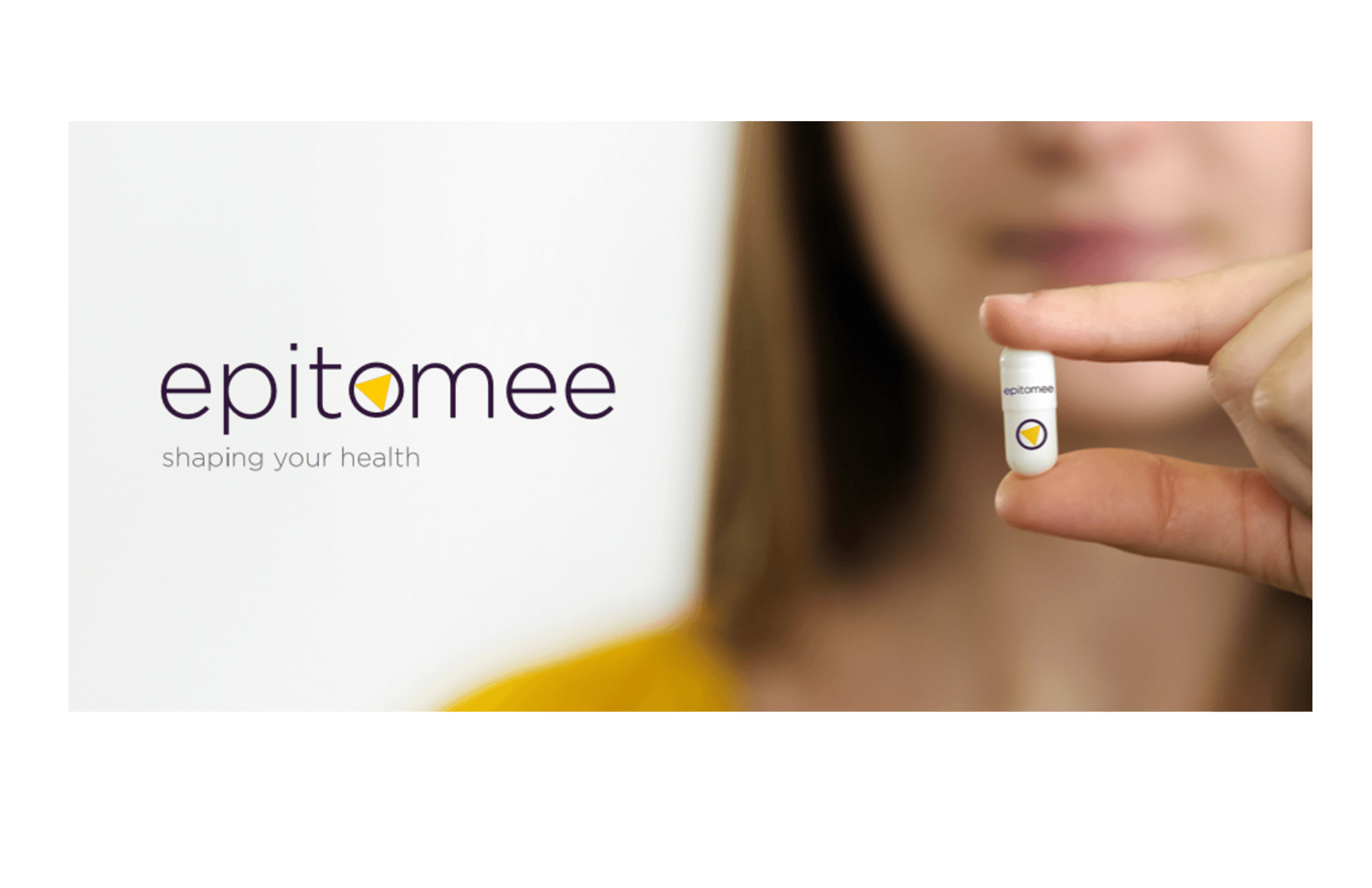
Epitomee® is an oral capsule that helps a person manage their weight without ingestion of drugs or chemicals. It works primarily through control of appetite and suppression of hunger.Â
Epitomee® works in the stomach to help maintain a sense of satiety (fullness or satisfaction), so that people will eat less throughout the day. When taken with water, the gel particles in the Epitomee® capsule are released and swell as they absorb water. This creates a sense of having a full stomach leading to reduced intake.
The swollen particles slowly pass through the stomach and are broken down through normal digestion, without any absorption. Eventually the particles are secreted out of the body in normal bowel movements. There is not normally any change to regularity of bowel movements, and the capsules do not cause constipation or diarrhoea.Â
When combined with diet and exercise, Epitomee® can help manage body healthy weight. The RESET clinical trial (Randomized Evaluation of Efficacy and Safety of the Epitomee capsule) was a successful, 24-week, double-blind, placebo-controlled study of 279 participants. The finding was that the weight loss capsule significantly helped overweight or obese adults lose weight compared to a placebo. Just over one-half of users achieved greater than 5% weight reduction. The device also had a favorable safety profile and participants reported improved quality of life. On average, individuals taking Epitomee® lost 6.6% of their body weight.Â
Epitomee® should be taken under the direction of a health care provider, as part of a structured weight loss program. Failure to adhere to prescribed dietary and exercise instructions may result in lower weight loss.
Dosage and directions for use
The capsule should be taken with water twice daily, usually half an hour before the main meals (lunch and dinner.)
One dose should be taken with water twice a day, 30 minutes before lunch and 30 minutes before dinner. Each dose comes from a single capsule of Epitomee® from a blister pack.
For each dose, follow the steps below:Â
- Ensure that the capsule is not broken, crushed, or damaged . Discard any damaged capsules
- Swallow one capsule with two glasses of water (8 fl oz/250 ml each). Taking the capsule with beverages other than water could lead to ineffective treatment.Â
- Wait about 30 minutes after swallowing an Epitomee® capsule before starting a meal.Â
- It is recommended to drink water throughout the day, in addition to the water taken with the capsule.Â
- If a pre-meal dose is missed, the capsule can be taken along with the mealalong with two glasses of water.Â
- All regular medications that should be taken with food should be taken at the start of the meal.Â
- For all medications that are taken once daily, it is advisable to take them either 10-15 minutes before taking the Epitomee® capsule in the morning (whether fasting or with breakfast) or after taking the Epitomee® capsule at bedtime, or as prescribed by a doctor.Â
Packaging and storage
Epitomee® is supplied in a blister pack, with either a single or 4 blister packs in each carton. Each blister pack contains 14 doses of one capsule, to be taken with water before lunch and dinner.Â
Capsules should be kept closed in the blister pack and stored at room temperature (between 59°F – 77°F / 15°C – 25°C). Epitomee® capsules should be kept in their original package until use.Â
Warnings and safety InformationÂ
Read this package insert in its entirety before using Epitomee®. Keep out of reach of children. Epitomee® may alter the absorption of medications.Â
GlossaryÂ
Abdomen: The part of the body between the chest and the pelvis that contains the organs of the digestive system.
Abdominal adhesions: Abnormal bands of fiber that form in the abdomen, and connect organs and tissues, causing them to stick together.
Adhesive peritonitis: Inflammation of the lining of the abdomen caused by inflammation of abdominal organs that are sticking together.
Body mass index (BMI): A common measure that uses height and weight to determine whether a person’s weight is in the healthy range. 18.5-24.9 kg/m2 : healthy 25-29.9 kg/m2 : overweight 30 kg/m2 or higher: obeseÂ
Crohn’s disease: A disease that causes painful inflammation in the digestive system.Â
Diverticula: Pouches of tissue from the large intestine that can become inflamed and painful and may cause bleeding.
Esophagus: The tube that allows the passage of food, liquids, and saliva from the mouth to the stomach.
Esophageal rings or webs: Folds that can form in the esophagus and block food from passing through easily to the stomach.
Ileus: Lack of normal movement somewhere in the intestines that leads to a buildup and potential blockage of food material.
Intestinal obstruction: A condition in which food and waste products are blocked from passing through the intestines.