 Anticoagulants have changed the way blood clotting disorders are managed, offering more predictable and convenient options than older therapies. Among the most widely used are Xarelto (rivaroxaban) and Eliquis (apixaban), both of which belong to a newer group known as factor Xa inhibitors. These medications are commonly prescribed to reduce the risk of stroke, prevent clots, and treat conditions such as atrial fibrillation, deep vein thrombosis, and pulmonary embolism.
How anticoagulants work in the body
To understand how these drugs compare, it helps to look at the biology of clot formation. Blood clotting depends on a cascade of proteins that activate one another in sequence. One of the key steps involves clotting Factor Xa, which converts prothrombin into thrombin. Thrombin then drives the final steps of clot formation.
Factor Xa inhibitors, including Xarelto and Eliquis, interrupt this process. By blocking Factor Xa, they reduce thrombin production and limit the body’s ability to form new clots or expand existing ones. This targeted action is what makes them effective anticoagulants, with fewer monitoring requirements than older drugs like warfarin.
Xarelto: mechanism and clinical use
Xarelto (rivaroxaban) works by directly inhibiting Factor Xa, reducing the formation of thrombin and preventing clot progression. One of its key advantages is its predictable effect, which allows for fixed dosing without routine blood testing.
It is typically prescribed for:
- Prevention of stroke in non-valvular atrial fibrillation.
- Treatment and prevention of deep vein thrombosis.
- Management of pulmonary embolism.
- Prevention of clot formation after major surgeries such as hip or knee replacement.
- Reduction of cardiovascular risk in certain patients when combined with aspirin.
Xarelto is available in multiple tablet strengths and is usually taken once or twice daily depending on the indication. While convenient, it does carry a known risk of increased bleeding, which is a shared feature of all anticoagulants.
Eliquis: mechanism and clinical use
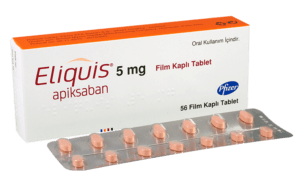
Eliquis (apixaban) is also a direct Factor Xa inhibitor, but with some differences in pharmacology and clinical outcomes. Like Xarelto, it reduces thrombin production and prevents clot formation. Its onset of action is relatively fast, and its effects wear off within about a day after discontinuation.
Common uses include:
- Stroke prevention in patients with atrial fibrillation.
- Treatment and prevention of deep vein thrombosis.
- Management of pulmonary embolism.
Eliquis does not require regular blood monitoring and avoids many dietary restrictions associated with older therapies. However, like all blood thinners, it increases the risk of bleeding and should not be stopped abruptly without medical guidance.
Xarelto vs. Eliquis: side-by-side comparison
| Description | Pros | Cons | Typical use |
|---|---|---|---|
| Xarelto |
|
|
|
| Eliquis |
|
|
|
Effectiveness and safety: what the evidence shows
Large-scale real-world studies comparing these anticoagulants have provided useful insights. Across hundreds of thousands of patients, Eliquis has been associated with a lower risk of stroke and systemic embolism compared to Xarelto. It has also shown a reduced rate of major bleeding events, including gastrointestinal and intracranial bleeding.
In addition, mortality rates were slightly lower among patients taking Eliquis. While these findings do not mean that one drug is universally better for every patient, they do suggest that Eliquis may offer a more favorable safety profile in many cases.
That said, individual response varies. Factors such as kidney function, dosing schedule, cost, and patient preference all play a role in determining the most appropriate choice.
Key differences that matter in real life
While both medications work through the same biological pathway, small differences can influence day-to-day use:
- Dosing frequency may affect adherence, with once-daily regimens sometimes preferred.
- Bleeding risk profiles differ slightly, with Eliquis often showing an advantage.
- Cost and availability can vary based on insurance and patent status.
- Individual patient factors, including age and kidney function, may guide the choice.
Cost, access, and practical considerations
Compared to older anticoagulants like warfarin, both Xarelto and Eliquis are more expensive. However, they offer important advantages, including fewer dietary restrictions and no need for routine INR monitoring.
Patent protections also influence availability. Eliquis has an approved generic version that is not yet widely available, while Xarelto remains under patent for a longer period. These factors can affect pricing and insurance coverage in the USA.
Accessing treatments for blood clotting disorders through IsraelPharm
Medications used in managing blood clotting disorders, including options like Xarelto and Eliquis, require a valid prescription and careful medical oversight. IsraelPharm operates as a licensed pharmacy platform under the supervision of the Israeli Health Ministry, providing access to prescribed anticoagulants for patients in the USA. This can be particularly relevant in situations where insurance limitations, pricing differences, or supply constraints affect availability through local channels.
Access to and cost of medications for blood clotting disorders from local pharmacies can vary depending on insurance coverage, supply, and prescribing requirements. Licensed international pharmacies like IsraelPharm can provide a simple, cost-reducing and safe pathway for obtaining medications such as Xarelto or Eliquis, particularly when local access is limited.
Supply of anticoagulants requires a valid prescription and appropriate medical oversight. These medications require careful selection and monitoring by a healthcare provider to ensure safety, particularly due to the risk of bleeding.
When considering alternative access options, it is esseantial to ensure that the pharmacy operates with high standards or privacy, safety and professional standards. We operate under the control and supervision of the Israeli Ministry of Health, one of the most advanced supplier of health services in the Western world.
Glossary
- Anticoagulants: Medications that reduce the blood’s ability to form clots.
- Factor Xa: A protein in the clotting process that helps generate thrombin.
- Thrombin: An enzyme that converts fibrinogen into fibrin to form clots.
- Prothrombin: A precursor protein that is converted into thrombin.
- Atrial fibrillation: An irregular heart rhythm that increases stroke risk.
- Deep vein thrombosis (DVT): A blood clot in a deep vein, usually in the leg.
- Pulmonary embolism (PE): A clot that travels to the lungs and blocks blood flow.
Frequently asked questions
Is Eliquis safer than Xarelto?
Studies involving large patient populations suggest that Eliquis may have a lower risk of major bleeding compared to Xarelto. This includes both gastrointestinal bleeding and more serious events like intracranial hemorrhage. However, safety depends on individual patient factors such as age, kidney function, and other medications. A healthcare provider will weigh these risks carefully before recommending one option over the other. Both medications are considered safe when used correctly under medical supervision.
Do these anticoagulants require blood tests?
Unlike older blood thinners such as warfarin, neither Xarelto nor Eliquis requires routine blood monitoring to check their effectiveness. This is because they produce more predictable anticoagulant effects. However, periodic checks of kidney function and overall health are still important. While regular INR testing is not needed, ongoing medical follow-up remains essential to ensure safe and effective treatment.
Can patients switch between Xarelto and Eliquis?
Switching between anticoagulants is possible, but it must be done carefully under medical supervision. Timing is critical to avoid gaps in anticoagulation or overlapping effects that could increase bleeding risk. A physician will provide specific instructions on when to stop one medication and start the other. Self-switching without guidance is not recommended due to the potential for serious complications.
Which anticoagulants are better for atrial fibrillation?
Both Xarelto and Eliquis are widely used for stroke prevention in atrial fibrillation. Evidence suggests that Eliquis may offer slightly better outcomes in terms of stroke prevention and bleeding risk. However, the best choice depends on individual patient characteristics, including medical history and lifestyle factors. Doctors often tailor the decision based on these considerations rather than relying on a single “best” option.
Are there dietary restrictions with these medications?
One of the advantages of these newer anticoagulants is that they do not require the strict dietary limitations associated with warfarin. Foods rich in vitamin K, such as leafy greens, do not interfere with their effectiveness. This makes them easier to manage in everyday life. However, alcohol intake and interactions with other medications should still be discussed with a healthcare provider.
What happens if a dose is missed?
Missing a dose can reduce the protective effect against clot formation. The recommended action depends on the specific medication and timing. In general, patients should follow the instructions provided with their prescription and consult their doctor if unsure. Because these drugs have relatively short durations of action, consistent dosing is important to maintain stable anticoagulation.
Further reading
- U.S. Food and Drug Administration – drug safety information
- American Heart Association – stroke and clot prevention
- CDC – deep vein thrombosis and pulmonary embolism
- MedlinePlus – anticoagulant medications overview
- IsraelPharm – Five common errors with Eliquis that put people at risk