Auvelity for MDD: How It Compares to Other Antidepressants
Discover how Auvelity for MDD offers a faster, unique approach to treating chronic depression compared to traditional SSRIs and SNRIs.
Spend $99, get free U.S. shipping*
Tariff now required on U.S. shipments. Learn more »
Tel: 1-866-456-3768 Fax: 1-866-544-8993
For visual reference only; actual product may vary
US Name:
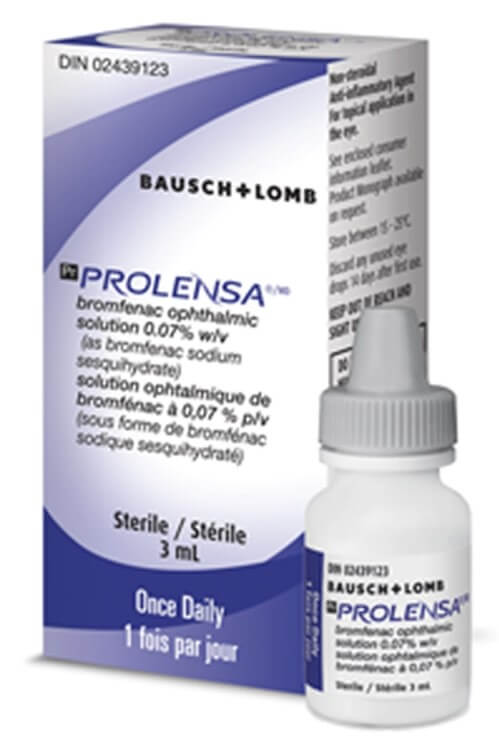
Prolensa
Alternative Names:
Prolensa
Active Ingredients:
Bromfenac
Brand Manufacturer:
Bausch & Lomb
Manufacturer Location:
Click here to view Product Insert
For visual reference only; actual product may vary
Prolensa (bromfenac) is a nonsteroidal anti-inflammatory (NSAID) eye drop. Doctors prescribe it to treat pain and reduce inflammation following cataract removal surgery. Its once-daily dosage helps ensure a more comfortable and smooth recovery process for patients, allowing the eye to heal properly.
| Prolensa Brand | 0.7% 3 mL |
-
|
Our price: $55.00 |
Prolensa is a prescription nonsteroidal anti-inflammatory drug (NSAID) in the form of an eye drop. Its active ingredient is bromfenac. Ophthalmologists prescribe this medication to patients for use before and after cataract surgery. Prolensa helps prevent eye swelling and reduces pain that can occur after the procedure. It is a well-regarded treatment for managing postoperative eye care. This medication is essential for a smooth and comfortable recovery process.
Prolensa works by blocking specific enzymes in the body known as cyclo-oxygenase (COX) enzymes. These enzymes produce chemicals called prostaglandins. Prostaglandins are a primary cause of inflammation and pain following an injury or surgery. By stopping their production in the eye, bromfenac effectively reduces swelling, tenderness, and pain. This targeted action helps the eye heal properly after a cataract operation. It allows for clearer vision and greater comfort during the recovery period.
Prolensa is for adult patients who have scheduled or recently undergone cataract surgery. It is specifically intended to treat and prevent the expected pain and inflammation associated with this procedure. Your eye doctor (ophthalmologist) will determine if this medication is the right choice for you. It is suitable for individuals who need a potent, once-daily eye drop to ensure their recovery is as smooth as possible. This medication is not intended for other types of eye pain or for chronic conditions.
Prolensa is typically administered as one single drop into the affected eye each day. Treatment usually starts one day before your cataract surgery. It continues on the day of the surgery and for the first 14 days of the postoperative period. Always wash your hands before applying the drops. To apply, tilt your head back and gently pull down your lower eyelid. Place one drop into the small pocket created. Be careful not to let the dropper tip touch your eye or any other surface. Close your eye for a moment to allow the medicine to spread. If you use other eye drops, wait at least five minutes between them.
Prolensa may cause some side effects, although most people experience none or only minor ones. The healing process itself can sometimes cause unusual sensations in the eye. You should discuss any concerns with your doctor.
Common side effects can include:
Serious side effects are uncommon. However, you should contact your healthcare provider immediately if you experience severe eye pain, changes in your vision, or discharge from the eye. Always follow your doctor’s guidance.
IsraelPharm is a trusted online source for prescription medications like Prolensa. We provide brand-name drugs from leading manufacturers at affordable prices. Our licensed pharmacy team ensures every order is handled with care and accuracy. We offer fast, reliable shipping directly to your door. This saves you time and the hassle of visiting a local pharmacy. Our customer service team is available to answer any questions you may have. Choosing IsraelPharm means choosing a safe, convenient, and cost-effective way to get the medications you need.
Most common side effects of Prolensa are mild and temporary. They may include:
More serious side effects are rare but require medical attention. Contact your doctor if you experience severe eye pain, significant vision changes, or signs of an allergic reaction.
Prolensa (bromfenac) is indicated for the treatment of postoperative inflammation and the reduction of ocular pain in patients who have undergone cataract surgery.

Prolensa is typically used for about two weeks after cataract surgery, but you must follow your doctor's specific instructions. The standard course involves one drop daily starting the day before surgery and continuing for 14 days. Do not stop using the medication early, even if you feel better, as this can affect your healing process.
Prolensa can cause temporary blurred vision immediately after you apply the drops. This is a common and usually short-lived side effect. For safety, you should wait until your vision clears completely before driving, operating machinery, or performing any other tasks that require clear sight. If it persists, contact your doctor.
If you miss a dose of Prolensa, you should skip the missed dose entirely and apply the next one at your regular scheduled time. Do not double the dose to make up for the one you missed. Using extra medication will not improve your results and may increase your risk of side effects.
Prolensa does not need to be refrigerated and should be stored at room temperature, which is between 59°F and 77°F (15°C and 25°C). Keep the bottle tightly closed in a cool, dark place away from moisture and direct sunlight. Do not freeze the medication, and always keep it out of reach of children.
Prolensa can often be used with other eye drops if your doctor has approved them. If you need to use more than one type of eye medication, you must wait at least five minutes between applications. This important waiting period prevents the drops from washing each other out and ensures each one is properly absorbed.
Prolensa is not a steroid; it is a nonsteroidal anti-inflammatory drug (NSAID). Its active ingredient, bromfenac, works by blocking enzymes that create substances called prostaglandins, which are responsible for causing inflammation and pain. This mechanism makes Prolensa highly effective for post-surgery eye care without using steroids.
If the Prolensa dropper tip touches your eye or any other surface, it can become contaminated with bacteria. This contamination can lead to a serious eye infection. Always be careful to avoid touching the dropper tip to any surface. If contact occurs, consult your pharmacist about whether the bottle is still safe to use.
Prolensa contains a preservative that can be absorbed by soft contact lenses, so you should not wear them while using this medication. Your eye is also very sensitive after surgery. Ask your ophthalmologist for specific advice on when it is safe to resume wearing contact lenses during your recovery period.
Prolensa may cause a brief, mild stinging or burning sensation when you first put it in your eye. This is a common and normal side effect that usually goes away within a minute or two. If the stinging is severe, lasts for a long time, or is accompanied by other symptoms, you should contact your doctor.
Your doctor will direct you to use Prolensa drops the day before surgery to begin reducing the risk of inflammation. By starting the medication early, it helps prepare the eye and ensures the anti-inflammatory effect is active when the surgery begins. This proactive approach helps manage pain and swelling much more effectively from the start.
Prolensa is the brand name for the active ingredient bromfenac, and generic versions of bromfenac ophthalmic solution are available. Generic options contain the same active medication and work in the same way but are often available at a lower cost. You can ask your pharmacist or doctor if a generic alternative is right for you.
Prolensa is an NSAID, and while it is applied to the eye, a small amount can be absorbed into the bloodstream. It is generally wise to limit alcohol consumption while using any NSAID, as the combination could potentially increase certain health risks. Please discuss your alcohol use with your doctor before starting your treatment.
Prolensa has been associated with changes in eye pressure (ocular hypertension) in a small percentage of patients. Your ophthalmologist will monitor your eye pressure during your follow-up visits after cataract surgery. It is very important to attend all scheduled appointments so your doctor can track your healing progress and watch for any side effects.
Send Your Prescription
No Hidden Fees
Generally 7-10 Business Days

IsraelPharm has been delivering lost cost prescriptions from Israel for over 15 years worldwide. Daily flights allow us to get your medications dispatched fast! Delivery to the USA is under 10 days and you can track and trace every order.

Discover how Auvelity for MDD offers a faster, unique approach to treating chronic depression compared to traditional SSRIs and SNRIs.

Is your generic medication truly safe? Explore the hidden risks of global drug manufacturing and learn how sourcing brand-name medications can protect patient safety.

The symptoms of menopause, during which women can feel physical and emotional discomfort, are often blamed entirely on declining levels of estrogen, but the hormone imbalance behind the symptoms is more complicated. In the years