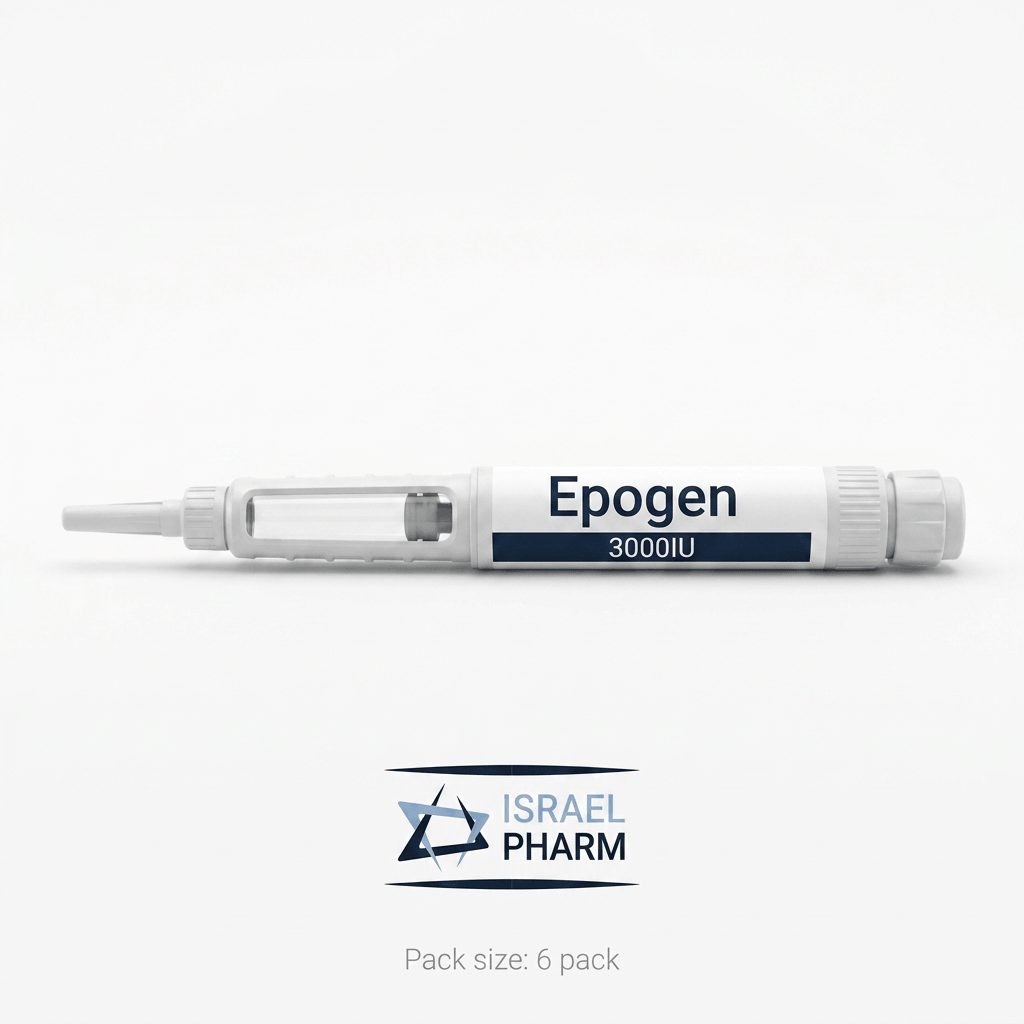
For visual reference only; actual product may vary
Prescription Required
All third-party products, company names, and logos are trademarks™ or registered® trademarks are and remain the property of their respective holders. Their use does not imply any affiliation with or endorsement by them. All references on this site to third-party trademarks are intended to constitute nominative fair use under applicable trademark laws.
Epogen (Epoetin Alfa) is a prescription medicine for treating anemia caused by chronic kidney disease or chemotherapy. It signals your body to produce more red blood cells. This action helps raise hemoglobin levels, increase energy, and may reduce the need for blood transfusions. It is given by injection.
Epogen is a man-made version of erythropoietin, a protein your body naturally produces. This medication is essential for treating certain types of anemia. Anemia is a condition where you lack enough healthy red blood cells to carry adequate oxygen to your body’s tissues. Epogen helps correct this imbalance. The active ingredient, Epoetin Alfa, is a type of erythropoiesis-stimulating agent (ESA). It functions just like the natural protein made in your kidneys. This treatment does not cure the underlying cause of anemia. However, it effectively manages the symptoms by boosting red blood cell counts. This helps improve quality of life for many patients.
How does Epogen work?
Epogen works by signaling the bone marrow to produce more red blood cells. The bone marrow is the soft, spongy tissue inside your bones where blood cells are made. Epoetin Alfa, the active ingredient, mimics the natural erythropoietin protein. It binds to receptors on progenitor cells in the bone marrow. This binding action stimulates them to develop into mature red blood cells. This process is called erythropoiesis. By increasing the rate of red blood cell production, Epogen raises hemoglobin levels in the blood. Higher hemoglobin means more oxygen is delivered throughout the body. This helps relieve the fatigue, weakness, and shortness of breath associated with anemia.
Who is Epogen for?
Epogen is for patients diagnosed with anemia resulting from specific medical conditions. It is commonly prescribed for individuals with chronic kidney disease, whether they are on dialysis or not. The kidneys normally produce erythropoietin, but in kidney disease, this function is impaired. Epogen is also used to treat anemia in cancer patients whose condition is not caused by iron or other nutrient deficiencies. These patients are often undergoing chemotherapy that can suppress red blood cell production. Additionally, it may be used before certain major surgeries. This helps reduce the need for allogeneic blood transfusions (blood from a donor) by increasing the patient’s own red blood cell volume.
Dosage and administration
Epogen is administered as an injection, either under the skin (subcutaneous) or into a vein (intravenous). A healthcare provider will determine the correct method and dose for you. The dosage is not one-size-fits-all. It depends on your body weight, the medical condition being treated, and your individual response to the therapy. Your doctor will monitor your blood counts closely, especially when starting treatment or adjusting your dose. They will aim for the lowest possible dose that effectively controls your anemia symptoms. It is very important to follow your doctor’s instructions precisely. Patients may be trained to administer the injections at home for convenience.
Side effects
Epogen may cause side effects, although many people have no, or only minor, issues. The most common side effect is high blood pressure. Your doctor will monitor your blood pressure regularly. Other common effects include headache, joint or muscle pain, fever, and irritation at the injection site. Nausea and vomiting may also occur. More serious side effects are possible but less common. These can include blood clots, stroke, heart attack, and seizures. Seek immediate medical attention if you experience chest pain, trouble breathing, or sudden numbness. Always discuss any side effects with your healthcare provider. They can help manage them and ensure the treatment is safe for you.
Why buy from IsraelPharm?
IsraelPharm provides a secure and affordable way to purchase your prescribed Epogen medication. We are committed to high standards of safety and customer care. Our platform allows you to conveniently order your medications from home. We source our products from reliable manufacturers, ensuring you receive authentic and effective treatments. Our customer service team is available to assist with your order and answer any questions. We streamline the process to make managing your health simpler. By choosing IsraelPharm, you are choosing a trusted partner for your long-term medication needs. We prioritize your well-being with every prescription we fill.
Common side effects may include:
High blood pressure (hypertension)
Headache
Joint pain (arthralgia)
Muscle aches and pain
Fever
Skin rash
Nausea and vomiting
Redness or pain at the injection site
Seek immediate medical help for serious side effects like:
Signs of a blood clot (e.g., chest pain, swelling in a leg)
Stroke or heart attack symptoms
Seizures
Severe allergic reactions
Epogen is indicated for the treatment of:
Anemia due to chronic kidney disease in patients on dialysis and not on dialysis.
Anemia in cancer patients on chemotherapy.
Anemia in zidovudine-treated HIV-infected patients.
Reduction of allogeneic red blood cell transfusions in patients undergoing elective, noncardiac, nonvascular surgery.
Epogen begins to increase red blood cell production within days, but it may take several weeks to notice a significant improvement in your anemia symptoms. Most patients see a rise in their hemoglobin levels within 2 to 6 weeks of starting treatment. Your doctor will monitor your blood work regularly to track your progress and adjust your dose as needed to reach your target hemoglobin level.
If you miss a dose of Epogen, you should take it as soon as you remember. However, if it is almost time for your next scheduled dose, skip the missed one and continue with your regular schedule. Do not take a double dose to make up for the one you missed. Always consult your doctor or pharmacist if you are unsure what to do after missing a dose.
Epogen must be stored in the refrigerator between 36°F to 46°F (2°C to 8°C). Do not freeze it, as freezing will ruin the medication. You should also protect it from light by keeping it in its original carton. Before an injection, you can let it sit at room temperature for about 15-30 minutes, but do not heat it in any other way. Discard any unused portion.
Epogen can often be injected at home after you receive proper training from a healthcare professional. Your doctor or nurse will show you the correct technique for preparing the dose and giving the injection, either under the skin or into your dialysis line. They will ensure you are comfortable and capable before you begin self-administration. Never attempt to inject Epogen without being trained first.
Epogen can cause an increase in blood pressure or worsen existing hypertension. This is one of the most common side effects of the medication. Your healthcare provider will monitor your blood pressure closely while you are on Epogen, especially during the initial phase of treatment. It is important to manage your blood pressure with diet, exercise, or other medications as your doctor recommends.
Epogen is not a form of chemotherapy. While it is often used for patients undergoing chemotherapy, its function is very different. Chemotherapy drugs are designed to kill cancer cells, but they can also damage healthy cells, including those that form red blood cells. Epogen is a supportive care medication used to counteract this specific side effect by stimulating the bone marrow to produce more red blood cells.
While using Epogen, your doctor will order regular blood tests to ensure the treatment is working safely and effectively. The most common test is a complete blood count (CBC), which measures your hemoglobin, hematocrit, and number of red blood cells. Your iron levels will also be checked frequently, as adequate iron is necessary for Epogen to work properly. Blood pressure monitoring is also crucial.
Epogen is different from a blood transfusion, although both treatments aim to increase red blood cell levels. A blood transfusion provides a direct and immediate-term supply of red blood cells from a donor. Epogen, on the other hand, is a medication that stimulates your own body to produce more red blood cells over time. It is a longer-term strategy to manage chronic anemia.
Before starting Epogen, you should tell your doctor about your complete medical history. Be sure to mention any history of heart disease, high blood pressure, seizures, blood clots, or porphyria. Also, provide a list of all medications, supplements, and vitamins you are taking to check for potential interactions. Inform your doctor if you are pregnant, planning to become pregnant, or breastfeeding.
Epogen is not used to treat all types of anemia. It is specifically for anemia caused by low levels of erythropoietin, which is common in chronic kidney disease and among cancer patients on chemotherapy. It is not effective for anemias caused by other factors, such as iron, vitamin B12, or folate deficiency. Your doctor will perform tests to determine the cause of your anemia before prescribing this medication.
Epogen needles and syringes must be disposed of safely in a puncture-resistant sharps container. You can get a sharps container from your pharmacy or medical supply company. Do not throw loose needles or syringes in the household trash. When the container is full, follow your community guidelines for proper disposal, which may involve taking it to a hospital, pharmacy, or designated collection site.
An allergic reaction to Epogen requires immediate medical attention. Symptoms can include a skin rash, itching, or hives, which may be widespread. You might also experience swelling of the face, lips, or tongue, which can cause difficulty breathing or swallowing. Dizziness or a feeling of fainting can also occur. If you notice any of these signs after your injection, seek emergency medical help.
IsraelPharm has been delivering lost cost prescriptions from Israel for over 15 years worldwide. Daily flights allow us to get your medications dispatched fast! Delivery to the USA is under 10 days and you can track and trace every order.
Glucagon-like peptide-1 (GLP-1) receptor agonists are medications prescribed for managing type 2 diabetes and, increasingly, for weight loss. These drugs, which include well-known brands like Ozempic, Mounjaro, Zepbound, and Wegovy, represent a significant advancement in
It can be one of the most frustrating experiences: you commit to a healthier lifestyle, you watch what you eat, you increase your activity, but the scale refuses to reward you. This struggle can feel
I have to admit, until very recently, I had never heard of Pelvic Congestion Syndrome. My attention was drawn just this week to an article from the Mayo Clinic, one of my regular sources of