GLP-1 Risks Explained Simply
You’ve probably seen headlines questioning the safety of GLP-1 medicines – the cornerstone of the wave of the latest drugs that have revolutionized many areas of healthcare, primarily in control of type 2 diabetes and
Spend $99, get free U.S. shipping*
Tariff now required on U.S. shipments. Learn more »
Tel: 1-866-456-3768 Fax: 1-866-544-8993
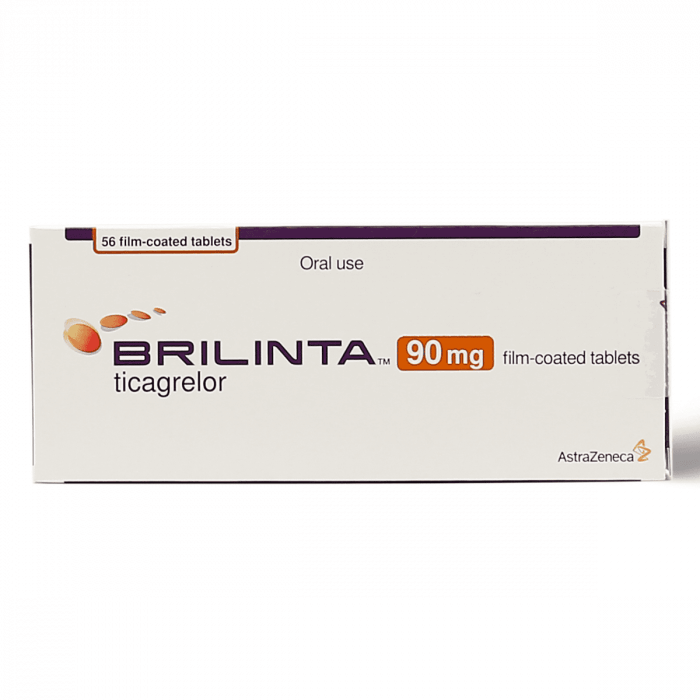
For visual reference only; actual product may vary
US Name:
Brilinta
Alternative Names:
Brilinta
Active Ingredients:
Ticagrelor
Brand Manufacturer:
Astra Zeneca
Manufacturer Location:
Sweden
Click here to view Product Insert
For visual reference only; actual product may vary
Brilinta (Ticagrelor) is a prescription blood thinner that reduces your risk of having a future heart attack or stroke. It’s used for patients who have had a recent acute coronary syndrome (ACS) or a prior heart attack, helping to prevent dangerous blood clots.
| Brilinta Brand | 60mg 56 Tablets |
-
|
Our price: $110.00 |
|
| Brilinta Brand | 90mg 56 Tablets |
-
|
Our price: $110.00 |
Brilinta (Ticagrelor) is a prescription antiplatelet medication, also known as a blood thinner, used to reduce the risk of cardiovascular death, heart attack, and stroke in patients with acute coronary syndrome (ACS) or a history of a heart attack. It works by preventing platelets in your blood from sticking together and forming dangerous clots that can block arteries. Brilinta is part of a class of drugs called P2Y12 inhibitors and is always prescribed to be taken along with a daily low-dose aspirin to maximize its protective effects on your cardiovascular system.
Brilinta works by blocking a specific receptor on the surface of platelets called P2Y12, which prevents them from clumping together to form a blood clot. Platelets are small blood cells that normally help your body stop bleeding by forming plugs at the site of an injury. However, in individuals with conditions like coronary artery disease, these clots can form inside arteries, obstructing blood flow to the heart or brain and causing a heart attack or stroke. By reversibly inhibiting these platelet receptors, Brilinta keeps blood flowing more smoothly and significantly lowers the likelihood of these life-threatening events.
Brilinta is intended for adult patients who have experienced an acute coronary syndrome (ACS) event—such as a heart attack or unstable angina—or who have a history of a heart attack and are considered at high risk for another thrombotic event. This medication is a preventative measure designed to lower the chances of a future cardiovascular event. Treatment is typically initiated with a higher dose right after an ACS event and then continued at a lower maintenance dose for long-term protection, making it a cornerstone therapy for secondary prevention in high-risk cardiology patients.
Brilinta is typically taken twice daily, with or without food, and should be co-administered with a daily maintenance dose of acetylsalicylic acid (ASA), or aspirin (usually 75-100 mg). For patients with ACS, treatment starts with a one-time loading dose of 180 mg (two 90 mg tablets) and continues with a maintenance dose of 90 mg twice daily for the first year. After one year, the dose is often reduced to 60 mg twice daily for continued prevention. It is critical to take Brilinta exactly as prescribed and not to stop treatment without consulting your doctor, as stopping prematurely significantly increases your risk of a heart attack or stroke. If you miss a dose, skip it and take your next dose at its regular time.
The most common side effect of Brilinta is an increased tendency for bleeding, but other effects like shortness of breath, dizziness, and nausea can also occur. Because it is a blood thinner, you may notice that you bruise more easily, get nosebleeds more often, or it takes longer for bleeding from a cut to stop. A feeling of shortness of breath (dyspnea) is also a known side effect. While most bleeding is minor, serious bleeding can occur. You should contact your doctor immediately if you experience signs of serious bleeding, such as red or black stools, coughing up blood, or severe, uncontrolled bleeding. Allergic reactions are rare but possible.
IsraelPharm offers a reliable and convenient way to purchase Brilinta at competitive prices, ensuring you have consistent access to your essential heart medication without leaving home. We source genuine, brand-name medications directly from authorized distributors, so you can be confident in the quality and authenticity of your prescription. Managing a chronic heart condition requires uninterrupted therapy, and our easy-to-use online platform and direct-to-door delivery service help ensure you never miss a dose. By choosing IsraelPharm, you prioritize both your health and your budget, receiving professional pharmacy service at a lower cost.
”’Common side effects of Brilinta may include:
More serious side effects can occur, such as major bleeding. Contact your doctor immediately if you experience signs of serious bleeding.
Brilinta (Ticagrelor), taken with aspirin, is used for the prevention of atherothrombotic events (like heart attack or stroke) in adult patients who have:
If you miss a dose, just take your next scheduled dose at its regular time. You should not take two doses of Brilinta at the same time to make up for a missed one. Maintaining a consistent schedule is important for the medication's effectiveness in preventing blood clots, so try to take it as prescribed by your doctor.
You should discuss your alcohol consumption with your doctor. Both alcohol and Brilinta can increase the risk of bleeding, especially in the stomach. Your doctor can provide personalized advice based on your health status and help you understand the potential risks of combining them. It's best to limit alcohol intake while on this medication.
Brilinta begins to inhibit platelet aggregation very quickly after the first dose, typically within 30 minutes to two hours. This rapid onset of action is crucial for patients who have recently experienced an acute coronary syndrome (ACS) event. Its full effect helps to immediately start reducing the risk of another cardiovascular event.
Yes, you will likely need to stop taking Brilinta 5 days before any planned surgery to reduce the risk of excessive bleeding. It is crucial to inform your doctor or dentist that you are taking Brilinta well in advance of any surgical or dental procedure. Do not stop taking it without your doctor's specific instructions.
Brilinta (Ticagrelor) and aspirin are both antiplatelet drugs, but they work in different ways to prevent blood clots. Brilinta blocks the P2Y12 receptor, while aspirin blocks an enzyme called cyclooxygenase. They are prescribed together after a heart attack or ACS because their combined action is more effective at preventing future cardiovascular events than either drug alone.
You should avoid taking nonsteroidal anti-inflammatory drugs (NSAIDs) like ibuprofen or naproxen with Brilinta, unless your doctor approves it. Taking them together can significantly increase your risk of bleeding, particularly stomach bleeding. For pain relief, consult your doctor about safer alternatives like acetaminophen that don't carry the same bleeding risk.
Shortness of breath, or dyspnea, is a known side effect of Brilinta. The exact reason is not fully understood but may relate to how the drug affects certain receptors in the lungs. This feeling is usually mild and often goes away on its own. However, you should report it to your doctor to rule out other serious heart or lung problems.
Yes, for patients who cannot swallow the tablets whole, Brilinta tablets can be crushed into a fine powder. The powder should then be mixed with half a glass of water and drunk immediately. The glass should be rinsed with another half-glass of water and the contents also consumed to ensure the full dose is taken.
There are no specific foods that must be avoided while taking Brilinta. However, it's wise to maintain a heart-healthy diet. Some supplements like ginkgo biloba or high-dose fish oil can increase bleeding risk, so you should discuss all vitamins and supplements with your doctor before taking them with Brilinta.
Brilinta should be stored at room temperature, between 68°F and 77°F (20°C to 25°C). Keep it in its original container, tightly closed, and away from moisture and heat. Do not store it in the bathroom, as the humidity can affect the medication. Keep it out of reach of children and pets.
Acute Coronary Syndrome (ACS) is a term for a range of conditions associated with sudden, reduced blood flow to the heart. This can include a heart attack (myocardial infarction) or unstable angina. Brilinta is prescribed for patients after an ACS event to help prevent another one from occurring by stopping harmful blood clots.
The duration of Brilinta treatment depends on your condition. After an ACS event, it's typically prescribed for at least 12 months at a 90 mg dose. After that, your doctor may decide to continue treatment at a lower 60 mg dose for long-term risk reduction, based on your individual risk factors.
Yes, a slow heartbeat (bradycardia) is a possible side effect of Brilinta. You may not notice any symptoms, but some people might feel dizzy, lightheaded, or faint. Your doctor may monitor your heart rate. It's important to report any episodes of fainting or severe dizziness to your healthcare provider for evaluation.
Send Your Prescription
No Hidden Fees
Generally 7-10 Business Days

IsraelPharm has been delivering lost cost prescriptions from Israel for over 15 years worldwide. Daily flights allow us to get your medications dispatched fast! Delivery to the USA is under 10 days and you can track and trace every order.

You’ve probably seen headlines questioning the safety of GLP-1 medicines – the cornerstone of the wave of the latest drugs that have revolutionized many areas of healthcare, primarily in control of type 2 diabetes and

People whose weight is higher than what is considered healthy for their height are described as having excessive body mass, clinically defined as being overweight or obese. Both of these can increase a person’s risk

The old saying “the devil is in the detail” has never been more applicable than it is right now. Multiple patients are discovering that what they regarded as straightforward access to prescribed medication once a