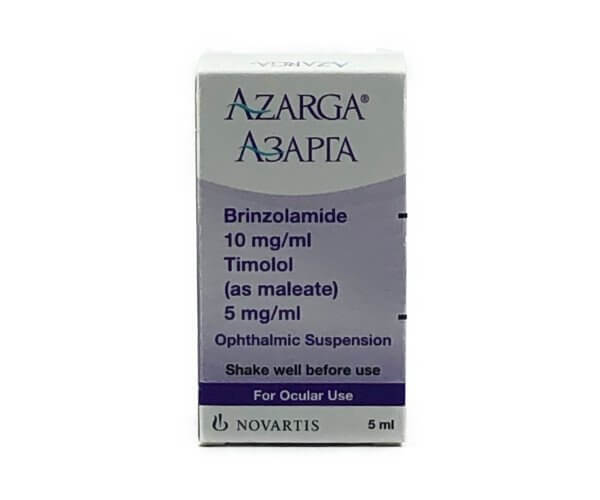
What is Azarga?
Azarga is a prescription medication in the form of an eye drop, used to lower high pressure inside the eye, known as intraocular pressure (IOP). It is prescribed for adults who have been diagnosed with open-angle glaucoma or ocular hypertension. Azarga contains two active ingredients, brinzolamide and timolol, which work together to provide a stronger effect than either medicine would on its own. It is typically used when a single-medication therapy has not been sufficient to control a patient’s eye pressure.
How does Azarga work?
Azarga works by combining two different medicines in one suspension to effectively decrease the production of aqueous humor, the fluid inside the eye. The first ingredient, Brinzolamide, is a carbonic anhydrase inhibitor that significantly reduces the production of this fluid. The second, Timolol, is a beta-blocker that also works to suppress the eye’s fluid production. By lowering the volume of fluid, this dual-action mechanism successfully reduces intraocular pressure, which helps to protect the optic nerve from damage and prevent vision loss associated with glaucoma.
Who is Azarga for?
Azarga is for adult patients diagnosed with open-angle glaucoma or ocular hypertension whose intraocular pressure is not adequately controlled with a single medication (monotherapy). It is often prescribed as a next step when a first-line treatment fails to achieve the target IOP reduction. Using a combination drop like Azarga can also be more convenient for patients, as it reduces the number of separate eye drops they need to administer each day. It is intended for individuals who do not have contraindications to its active ingredients, such as certain respiratory or heart conditions.
Dosage and administration
Azarga is typically administered as one drop into the affected eye or eyes twice daily, once in the morning and once in the evening. It is important to follow the specific dosage instructions provided by your doctor. Before use, wash your hands and shake the bottle well. To apply, tilt your head back, create a small pocket with your lower eyelid, and squeeze one drop in without letting the bottle tip touch your eye. Close your eye gently for a minute. If you use other eye medications, wait at least five minutes between applications.
Side effects
The most common side effects of Azarga are temporary and localized, including blurred vision, a bitter or unusual taste in the mouth, and minor eye irritation or discomfort upon application. These effects are generally mild and tend to resolve on their own. However, more serious side effects can occur and require medical attention. These include signs of an allergic reaction like a skin rash, eye pain, swelling or itching, or systemic effects like dizziness, shortness of breath, or a drop in blood pressure. If you experience any severe or persistent side effects, contact your doctor promptly.
Why buy from IsraelPharm?
Buying from IsraelPharm offers a secure, affordable, and straightforward way to obtain your prescribed Azarga eye drops. We are committed to providing authentic, brand-name medications sourced from a licensed and regulated supply chain, ensuring you receive the same quality product you would at a local pharmacy but often at a more competitive price. Our user-friendly online platform, dedicated customer service team, and reliable international shipping make managing your prescriptions and your health both simple and convenient from the comfort of your home.
Like all medications, Azarga can cause side effects. Not everyone will experience them.
Common side effects may include:
- Blurred vision
- Eye irritation or discomfort
- A bitter or unusual taste in the mouth
- Sensation of having something in the eye
Check with your doctor as soon as possible if any of the following more serious side effects occur:
- Eye pain, itching, or swelling
- Skin rash or other signs of an allergic reaction
- Coughing, wheezing, or shortness of breath
- Dizziness, lightheadedness, or fainting
- Slow or irregular heartbeat
Azarga® (brinzolamide/timolol ophthalmic suspension) is indicated for lowering intraocular pressure (IOP) in adult patients with open-angle glaucoma or ocular hypertension. It is prescribed when monotherapy does not provide a sufficient IOP reduction and combination therapy is appropriate.