 Finger and toe nails serve very important roles in everyday life. They are there to protect the sensitive skin areas that are the most often subject to contact with hard surfaces, sharp edges, and subject to abrasion. They can also act as windows into other biological processes going on deeper in the body. So it’s important to take good care of the nails, and to pay attention to any changes that could signal either that the nails themselves need some special treatment, or that there is something going on elsewhere in the body that should be attended to with the help of a healthcare provider.
Nails are more than just cosmetic surfaces
Nail changes are often one of the earliest visible signs that something inside the body is not working quite as expected. Because nails grow slowly and continuously, they tend to record disruptions in health over time rather than reflecting only short-term issues.
Changes in color, thickness, texture, or shape may appear gradually. These shifts are easy to dismiss as aging, injury, or normal wear and tear, but they sometimes reflect deeper processes affecting circulation, inflammation, or immune function.
In this sense, nails can function as warning signs. They do not indicate illness on their own, but they can provide useful signals when viewed alongside skin changes, general health, and medical history.
Common nail conditions that can be missed
Many forms of nail disease go unnoticed because they do not cause immediate pain or obvious disability. When more visible skin conditions are present, subtle nail involvement may receive less attention.
Inflammatory skin disorders are a frequent example. These conditions often affect both the skin and the nails, but nail involvement may lag behind or appear less dramatic at first.
Two inflammatory conditions that commonly involve the nails are psoriasis and lichen planus nails. In both cases, nail changes can develop even when skin symptoms are mild or well controlled.
When nail changes are a sign of inflammation
Inflammation can interfere with how nails form and attach to the nail bed. Over time, this disruption may alter the nail’s surface and structure.
Common inflammatory nail changes include:
-
- Ridging.
- Splitting.
- Thickening.
- Discoloration.
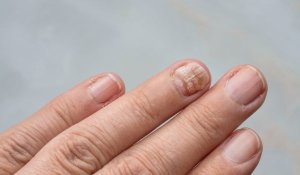
In nail psoriasis, small pits, lifting of the nail from the nail bed, and buildup beneath the nail are particularly common. These changes may progress slowly, which is why they are sometimes overlooked until they interfere with daily activities.
Becoming more familiar with psoriasis-related nail changes helps place these signs in context and reduces the risk that they will be dismissed as purely cosmetic.
Pay special attention to nail changes in children
According to the Amercial College of Dermatologists, nail changes in children deserve careful attention, but action should be taken without undue panic. Many changes are temporary and reflect growth, minor trauma, or recent illness rather than chronic disease.
Children are naturally hard on their hands and feet. Nail biting, sports injuries, and repeated pressure from footwear can all alter nail appearance without signaling an underlying condition.
Some pediatric nail findings, such as Beau’s lines or temporary nail shedding after fever or illness, are well-recognized and usually resolve as the nail grows out.
Practical advice for parents and caregivers
Certain nail issues in children are more likely to require monitoring because they can persist or worsen over time.
These include:
-
- ingrown nail problems that recur.
- Trauma-related nail changes that do not improve.
- Improper trimming that alters nail shape.
- Footwear that places uneven pressure on growing nails.
- Progressive shape changes affecting multiple nails.
Chronic inflammation, even when mild, can interfere with normal nail growth. When left unaddressed, it may contribute to lasting changes in nail structure and comfort.

Red flags: nail changes that should never be ignored
Some nail findings are considered clear warning signs because they may reflect infection, inflammation, or more serious disease, and consulting with a dermatologist is the best way to find out whether any action is required.
These include:
-
- Persistent nail distortion.
- Pain or bleeding involving the nail or surrounding skin.
- Unexplained color changes or dark streaks.
- Lesions that extend beyond the nail onto nearby skin.
Dark streaks under a nail, especially when new or changing, are among the most important melanoma signs affecting nails. While many streaks are benign, evaluation is important because early detection changes outcomes.
Nail involvement is common in psoriasis and other inflammatory skin disorders. In some cases, nail changes may be the most visible sign of a broader condition affecting the skin or joints.
Treatment options for inflammatory skin conditions
Inflammatory skin conditions such as psoriasis and eczema are typically managed as part of overall dermatologic care. When they involve the nails, treatment approaches may differ from those used on skin alone.
Dovonex Ointment contains calcipotriol (a vitamin D derivative), which is an effective topical treatment for nail psoriasis, particularly for reducing subungual hyperkeratosis (buildup under the nail) and onycholysis (separation of the nail from the bed). It is often prescribed by dermatologists to be used in combination with potent corticosteroids for better results and is considered a safe, long-term, well-tolerated option.
Dovobet is an antipsoriasis ointment containing both calcipotriol and betamethasone, a corticosteroid. It is prescribed specifically for plaque-type psoriasis, a condition in which skin cells become overactive, causing raised, rough, reddened areas covered with dry, silvery scales. Calcipotriol helps address the overactive skin cells, while betamethasone alleviates redness, swelling, itching, and skin irritation.
Because nails grow slowly, improvement from treatment is often gradual. Dermatologists typically assess nail response over months rather than weeks.
Early treatment of nail changes matters
Delays in addressing persistent nail changes can lead to lasting damage. Once the nail structure is significantly altered, full recovery becomes more difficult.
Managing the underlying condition, whether inflammatory or infectious, improves the likelihood of healthy nail regrowth. Early recognition also helps distinguish reversible changes from those that may become permanent.
Takeaway thoughts: “tough as nails” may not be true
Most nail changes are harmless and resolve on their own. Others deserve closer attention because they reflect changes beneath the surface.
Understanding the difference helps people seek care at the right time, without unnecessary alarm or delay. Nails may be resilient, but they are not immune to what is happening elsewhere in the body.
Frequently asked questions about nail changes
What types of nail changes are considered normal?
Many nail changes occur as part of normal aging or daily wear and tear. Mild ridges, slight color variation, and slow changes in thickness often reflect repeated minor trauma or reduced circulation over time. These changes usually affect multiple nails in a similar way and progress gradually.
Normal nail variation does not typically involve pain, bleeding, or sudden structural changes. When nail appearance shifts slowly and remains stable, it is often considered benign.
Can nail changes really signal internal health problems?
Yes. Nails can reflect processes occurring elsewhere in the body because their growth depends on adequate blood flow, oxygen, and nutrient supply. Conditions affecting circulation, inflammation, or immune function may alter nail appearance.
While nail changes alone do not diagnose disease, they can provide useful context when combined with other symptoms or medical findings.
How are fungal nail infections different from inflammatory nail disease?
fungal nail infections typically cause discoloration, thickening, brittleness, and buildup under the nail. They often progress slowly and may spread to other nails over time.
Inflammatory nail disease, such as nail psoriasis, more commonly causes pitting, lifting, and changes in nail texture. Both conditions may appear similar, which is why evaluation is often needed to tell them apart.
Are nail changes in children usually serious?
Most nail changes in children are temporary and related to growth, minor injuries, or recent illness. Nails in children grow faster than in adults, which allows many changes to resolve naturally.
Persistent changes, pain, or involvement of multiple nails may warrant closer attention to rule out infection or inflammation.
When should nail changes be evaluated by a healthcare professional?
Nail changes should be evaluated when they are painful, progressive, associated with bleeding, or involve dark streaks that are new or changing. Nail changes that occur alongside skin rashes or joint symptoms also deserve attention.
Early evaluation helps clarify whether nail findings are benign or part of a broader condition affecting overall skin and nail health.