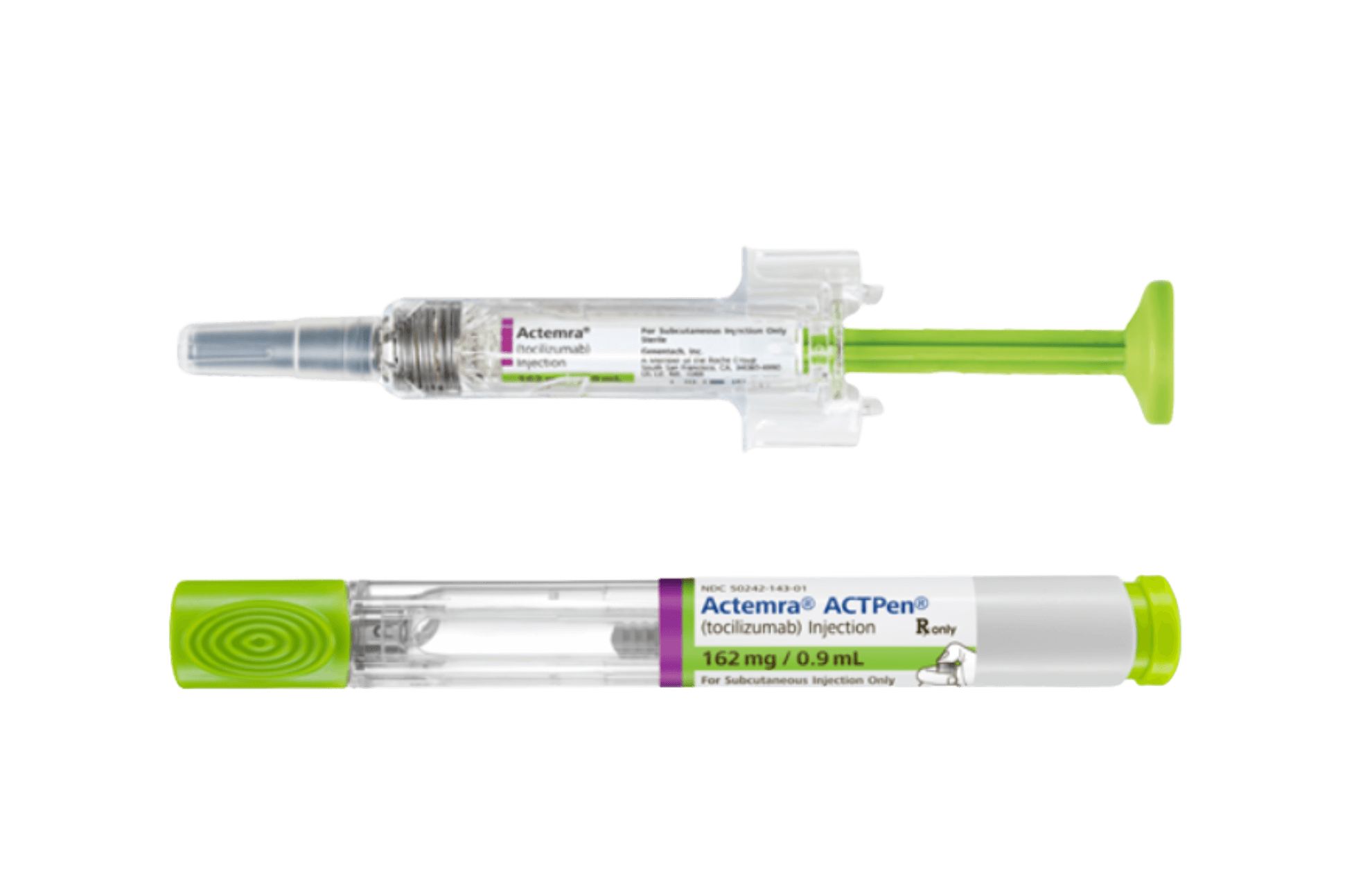
What is Actemra?
Actemra is an injectable prescription medicine, with the active ingredient tocilizumab, used to treat several inflammatory autoimmune conditions. It is classified as an interleukin-6 (IL-6) receptor antagonist, which means it works by targeting a specific part of the immune system to reduce inflammation. Actemra is primarily prescribed for adults with moderate to severe rheumatoid arthritis (RA) or giant cell arteritis (GCA), and for children with systemic or polyarticular juvenile idiopathic arthritis (sJIA or pJIA).
How does Actemra work?
Actemra works by selectively blocking the inflammatory protein Interleukin-6 (IL-6) from binding to its receptors in your body. In autoimmune conditions like rheumatoid arthritis, the immune system produces too much IL-6, which leads to inflammation, joint pain, swelling, and damage. By preventing IL-6 from sending its inflammatory signals, Actemra helps to calm the overactive immune response, reduce symptoms, and slow the progression of the disease.
Who is Actemra for?
Actemra is intended for patients diagnosed with specific inflammatory autoimmune diseases who may not have had success with other treatments. This includes adults with moderate to severe rheumatoid arthritis, especially after other Disease-Modifying Antirheumatic Drugs (DMARDs) were not effective. It is also for adults with Giant Cell Arteritis (GCA). For younger patients, Actemra is approved for children aged one and older with active systemic juvenile idiopathic arthritis (sJIA) and children aged two and older with polyarticular juvenile idiopathic arthritis (pJIA).
Dosage and administration
Actemra is administered as a subcutaneous injection, meaning it is injected just under the skin. After initial training from a healthcare professional, most patients or their caregivers can administer the injections at home. The dosing schedule depends on the condition being treated and is typically once every one to two weeks. It is very important to rotate the injection site (e.g., abdomen, thigh) with each dose to prevent skin irritation. If you miss a dose, inject it as soon as you remember and then continue with your regular schedule.
Side effects
Actemra may cause side effects, though many people experience none or only minor issues. The most common side effects include upper respiratory tract infections (like a cold or sinus infection), headache, increased blood pressure, and reactions at the injection site such as redness or pain. More serious side effects can occur, including an increased risk of serious infections, potential changes in liver enzyme levels or blood counts, and, rarely, severe allergic reactions. If you experience symptoms like a high fever, severe rash, or difficulty breathing, seek medical attention immediately.
Why buy from IsraelPharm?
Choosing IsraelPharm for your Actemra prescription provides a reliable and cost-effective way to manage your condition. We source our medications from authentic, licensed manufacturers like Hoffman La Roche, ensuring you receive the same high-quality treatment you would from a local pharmacy. Our streamlined online ordering process, dedicated customer support, and direct shipping make accessing your essential medication both simple and affordable, helping you focus more on your health and well-being.
Most individuals using Actemra do not have serious side effects, but some may occur. Seek immediate medical attention or call 911 if you experience signs of a severe allergic reaction, such as facial swelling, difficulty breathing, or a severe skin rash.
Common or possible side effects include:
- Upper respiratory tract infections (cough, sore throat, congestion)
- Headache
- Increased blood pressure (hypertension)
- Reactions at the injection site (redness, pain, itching)
- Abnormal results on liver function tests
- Stomach pain or mouth ulcers
This is not a complete list. If you experience these or any other unusual symptoms that persist or worry you, contact your healthcare provider for advice.
Actemra is prescribed to treat several inflammatory diseases where the immune system attacks the body’s own tissues. These include:
- Rheumatoid Arthritis (RA): For adults with moderate to severe RA who have not responded well to at least one other DMARD medication.
- Giant Cell Arteritis (GCA): For adult patients with inflammation of the large blood vessels, particularly those supplying the head.
- Systemic Juvenile Idiopathic Arthritis (sJIA): For children aged 1 and older with active sJIA, a type of arthritis that affects the entire body.
- Polyarticular Juvenile Idiopathic Arthritis (pJIA): For children aged 2 and older with active pJIA, which affects five or more joints.