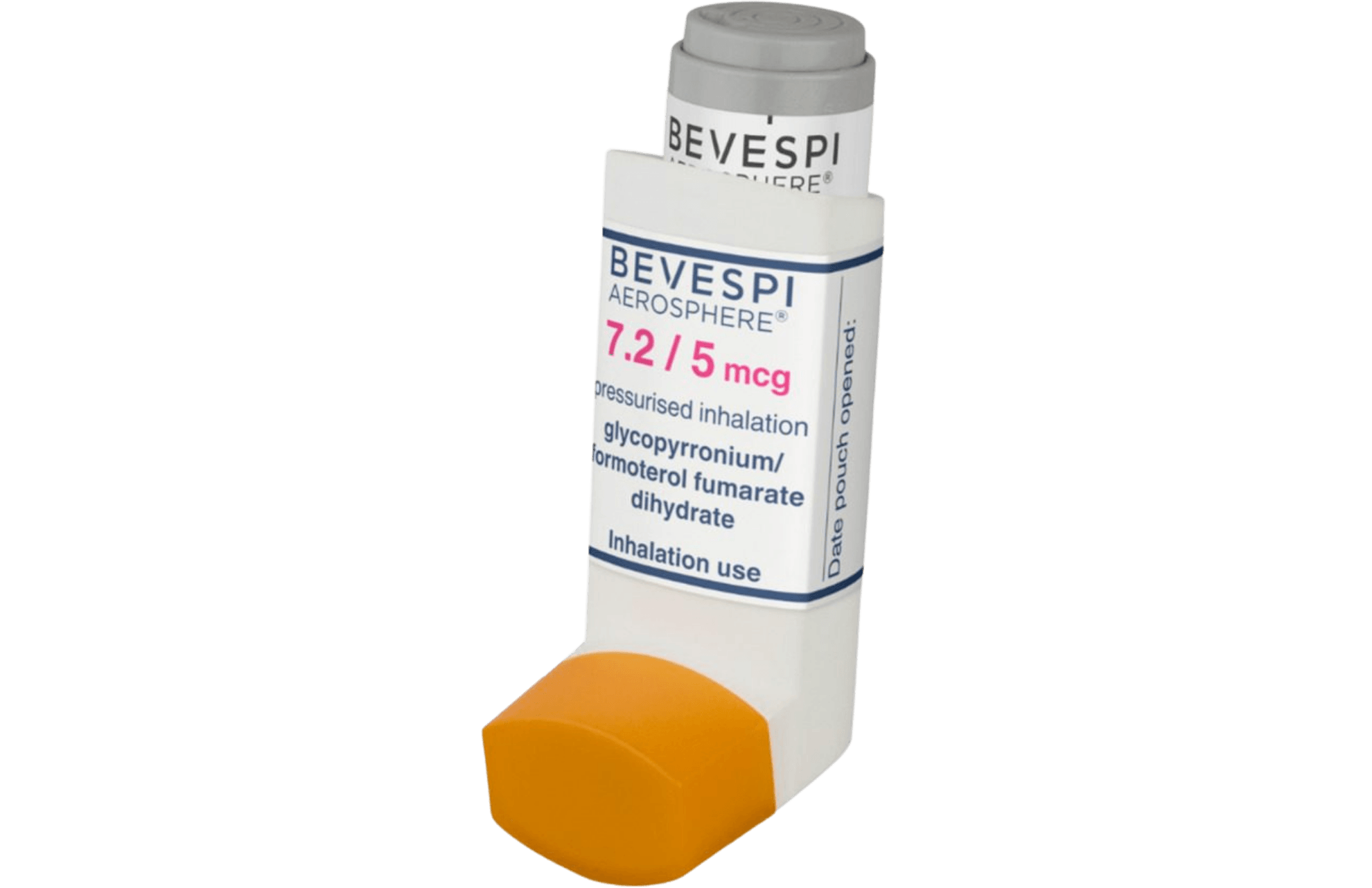
What is Bevespi?
Bevespi is a prescription maintenance medication used for the long-term treatment of Chronic Obstructive Pulmonary Disease (COPD), including chronic bronchitis and emphysema. It is delivered as a metered-dose inhaler and contains two active ingredients, glycopyrronium and formoterol, which work together to improve airflow and make breathing easier. Bevespi is intended for regular, twice-daily use to prevent symptoms and is not a rescue inhaler for sudden breathing attacks.
How does Bevespi work?
Bevespi works by combining two different types of bronchodilators that relax the muscles around the airways in your lungs. The first ingredient, glycopyrronium, is an anticholinergic (LAMA) that blocks nerve impulses that cause airways to tighten. The second, formoterol, is a long-acting beta-agonist (LABA) that stimulates receptors to relax the airway muscles. This dual-action approach helps keep the airways open for an extended period, providing consistent relief from COPD symptoms.
Who is Bevespi for?
Bevespi is for adults who have been diagnosed with COPD and require a long-term maintenance treatment to manage their condition. It is suitable for patients who experience persistent symptoms like shortness of breath, coughing, and wheezing, and who would benefit from a combination bronchodilator therapy to prevent flare-ups. This medication is not intended for the treatment of asthma or for patients under 18 years of age. It should only be used as prescribed by a healthcare provider after a thorough evaluation.
Dosage and administration
The standard dosage for Bevespi is two puffs administered orally, twice a day, typically once in the morning and once in the evening. It is crucial not to exceed two puffs twice daily. For the medication to be effective, it must be used every day as prescribed, even if you are not experiencing symptoms. Before the first use, the inhaler must be primed by releasing four test sprays. The inhaler should also be cleaned regularly to prevent buildup. Each inhaler contains 120 puffs, which provides a 30-day supply at the recommended dosage.
Side effects
Like all medications, Bevespi can cause side effects, though not everyone experiences them. Common side effects may include cough, urinary tract infections, and headache. More serious side effects can occur and require immediate medical attention, such as sudden breathing problems after a dose, a fast or irregular heartbeat, chest pain, tremors, or signs of an allergic reaction. Bevespi may also cause eye problems like glaucoma or urinary retention. Always discuss potential side effects with your doctor before starting treatment.
Why buy from IsraelPharm?
Choosing IsraelPharm for your medication needs means prioritizing safety, affordability, and convenience. We provide access to authentic, brand-name medications like Bevespi, sourced from licensed distributors, at prices that are often significantly lower than in the US. Our platform makes it simple to order your prescriptions online and have them delivered directly to your door. With a commitment to excellent customer service, our team is here to ensure you have a seamless and trustworthy experience when managing your health.
This text is for informational purposes only. Please consult with a doctor or pharmacist before using any medication.
Call a doctor or 911 right away if you experience signs of a severe allergic reaction, such as:
- Swelling of the face, tongue, or throat
- Difficulty breathing or swallowing
- Hives, rash, or skin sloughing
Bevespi can cause other serious side effects, including:
- Sudden breathing problems immediately after inhaling
- Fast or irregular heartbeat and chest pain
- Tremors or nervousness
- Eye pain, blurred vision, seeing halos, or red eyes
- Urinary retention or difficulty urinating
Some other possible mild side effects are:
- Cough
- Headache
- Urinary tract infection
- Indigestion
Not all side effects are listed here. If these or other unlisted symptoms persist or worsen, consult with a healthcare provider.
Bevespi is indicated for the long-term, maintenance treatment of airflow obstruction in patients with Chronic Obstructive Pulmonary Disease (COPD).
COPD is a chronic inflammatory lung disease that causes obstructed airflow from the lungs. Its primary causes are emphysema and chronic bronchitis. Symptoms often include:
- Shortness of breath, especially during physical activities
- Wheezing
- Chronic cough that may produce mucus
- Frequent respiratory infections
- Lack of energy