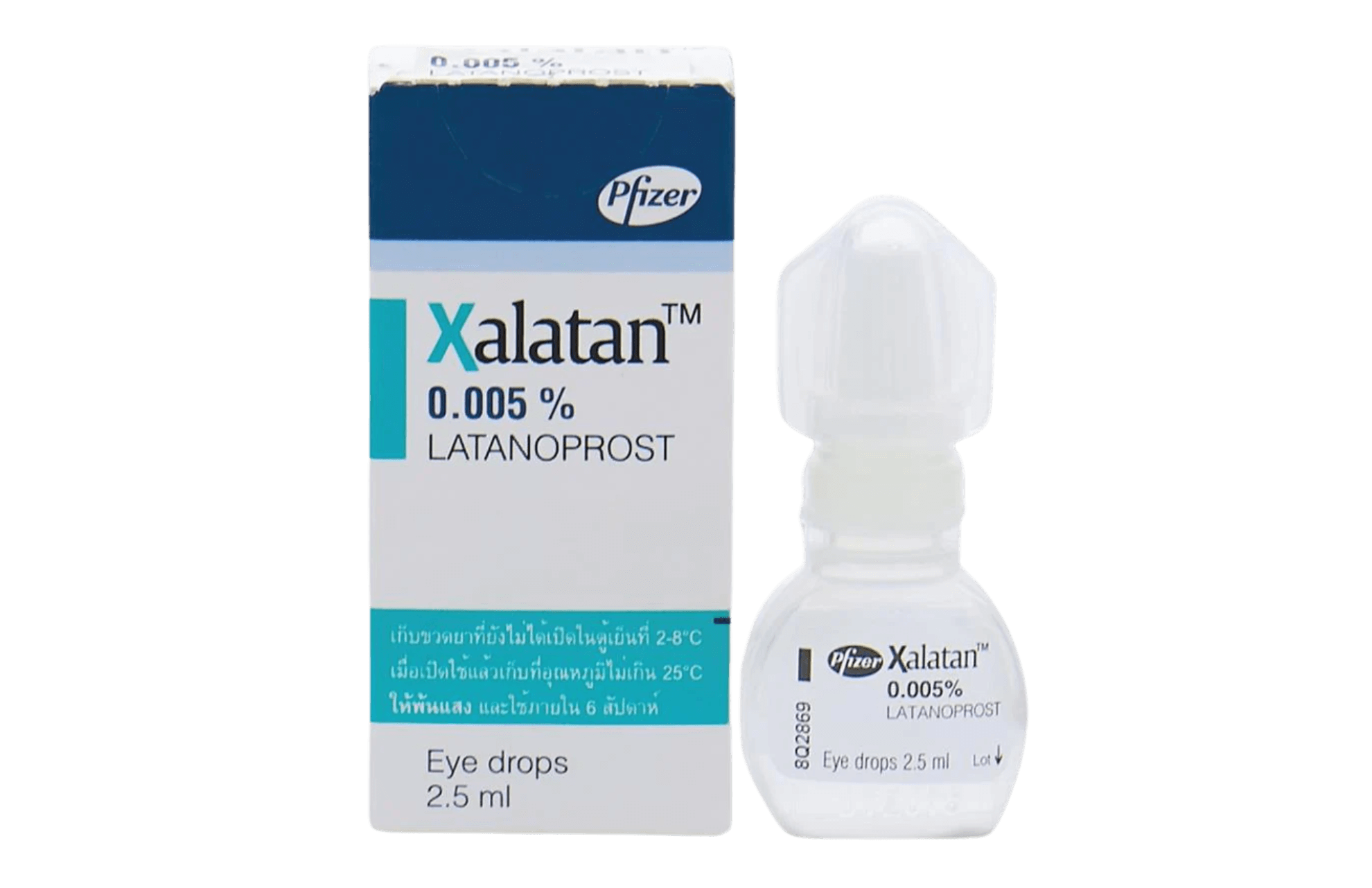
Xalatan (generic name: latanoprost) is a medication primarily used to manage increased eye pressure (ocular hypertension) and to prevent the development of open-angle glaucoma. These conditions can lead to progressive vision loss if left untreated.
Latanoprost is a prostaglandin analogue that enhances the natural outflow of aqueous humor from the eye, thereby reducing intraocular pressure (IOP). This mechanism helps alleviate the strain on the optic nerve, preserving visual function over time. Xalatan is suitable for adults, including the elderly, and has also been approved for use in pediatric patients from birth to 18 years of age.
Caution
Pregnant or breast-feeding women should not use Xalatan unless a doctor considers it necessary. Women who are already pregnant or breast-feeding, or are planning to have a baby, should consult their doctor for advice before using this medicine. If you are already taking Xalatan and fall pregnant, talk to a doctor right away. Patients with a history of herpes simplex eye infections should advise their doctor before use.
Dosage and administration
Follow the prescribing doctor’s instructions for the proper dosing regimen. The standard dosing regimen for Xalatan involves instilling one drop into each affected eye once daily, preferably in the evening. It’s important to adhere to this once-daily schedule, as more frequent administration may reduce the drug’s effectiveness in lowering IOP. If a dose is missed, continue with the next scheduled dose. Don’t double-dose to make up for a missed dose.
Contact lenses should be removed prior to application and can be reinserted 15 minutes after administering the drops. When using multiple topical ophthalmic medications, each should be administered at least five minutes apart to prevent dilution and ensure efficacy.
Storage Guidelines:
Before opening, Xalatan should be stored in its original box away from direct sunlight and moisture. Once the bottle is opened, it can be kept at room temperature, not exceeding 25°C (77°F), and should be used within four weeks to ensure potency and sterility. To protect the solution from light, always keep the bottle in its original outer carton. Proper storage is crucial to maintain the medication’s effectiveness and safety. For more information, read our article on drug storage.
Common Questions About Xalatan
How does Xalatan work to lower eye pressure?
As a prostaglandin analogue, Xalatan increases the outflow of aqueous humor from the eye, effectively lowering intraocular pressure and reducing the risk of damage to the optic nerve.
What is open-angle glaucoma?
Open-angle glaucoma is a chronic eye condition where the drainage angle remains open, but the trabecular meshwork becomes less efficient at draining aqueous humor, leading to increased intraocular pressure and potential optic nerve damage.
How does ocular hypertension differ from glaucoma?
Ocular hypertension refers to elevated intraocular pressure without detectable optic nerve damage or vision loss, whereas glaucoma involves both increased eye pressure and associated optic nerve damage.
This text is for informational purposes only. Please consult a doctor or pharmacist before using any medication.
Read the information leaflet that comes with the medication.
Most people who use Xalatan do not experience any adverse side effects. Doctors prescribe this medication because they assess the benefits of such treatment outweigh any likely unwanted effects.
Some of the side effects that have been reported include eyelid inflammation (blepharitis), eye pain, light sensitivity (photophobia), conjunctivitis, mild eye irritation, redness, and changes in eyelash growth. There may be a gradual increase in brown pigmentation of the iris, which may be permanent. Children sometimes develop a runny and itchy nose and a fever.
Serious side effects are rare but can include severe eye pain, vision changes, or signs of an allergic reaction. Consult a doctor or pharmacist for advice.
Not all side effects are listed here. If these or other unlisted symptoms persist or worsen, consult a healthcare provider or pharmacist.
Xalatan is primarily prescribed for the reduction of elevated intraocular pressure associated with open-angle glaucoma and ocular hypertension. Open-angle glaucoma is the most common form of glaucoma, characterized by a gradual increase in eye pressure due to inefficient drainage of aqueous humor. Ocular hypertension refers to higher-than-normal eye pressure without detectable damage to the optic nerve or vision loss. By lowering IOP, Xalatan helps mitigate the risk of optic nerve damage and the progression to glaucoma-related vision impairment.