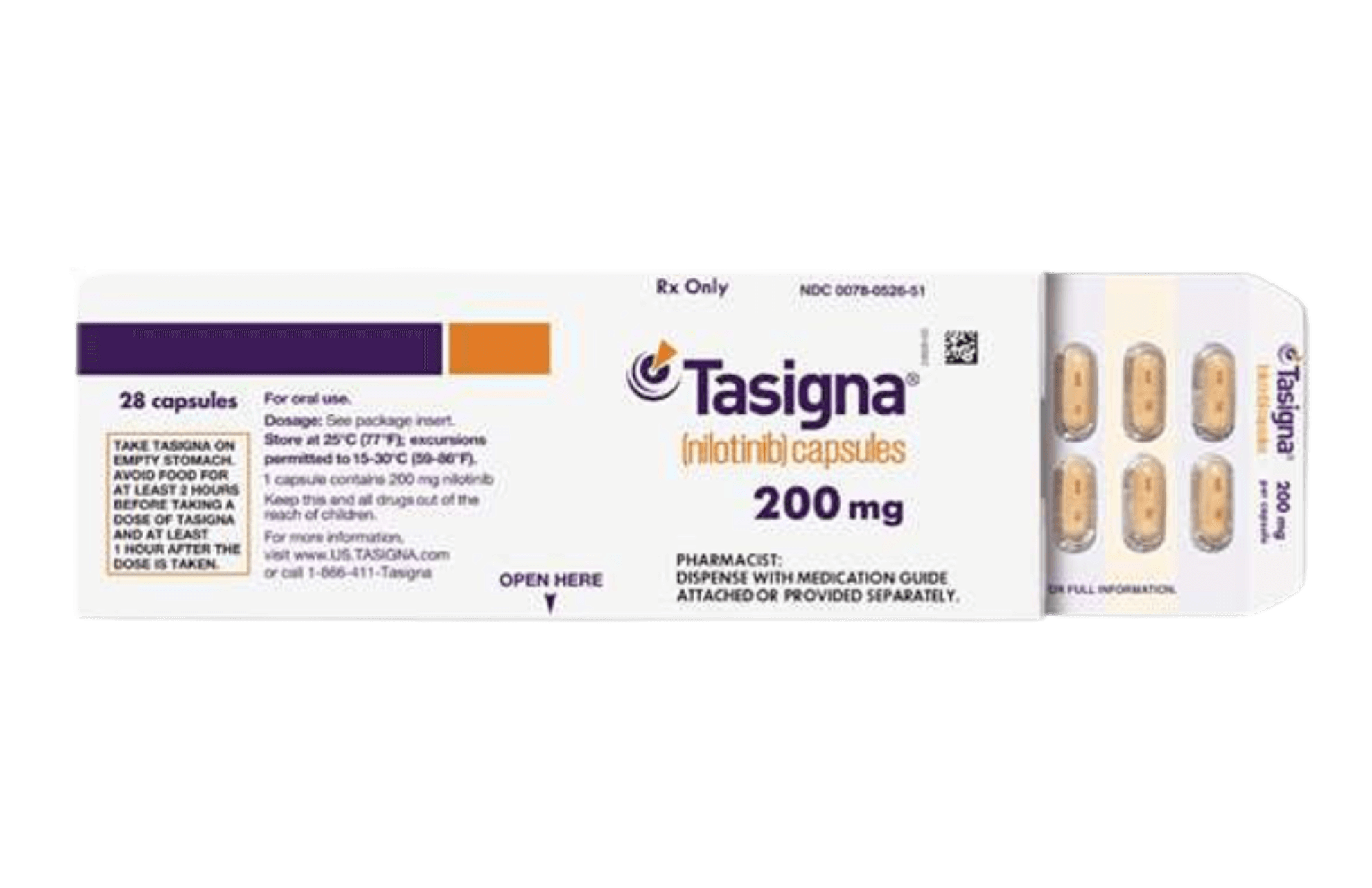
Tasigna (
generic name: nilotinib) is a targeted anticancer medicine indicated for the treatment of
Philadelphia chromosome–positive chronic myeloid leukaemia (
Ph+ CML). It is a
tyrosine kinase inhibitor that selectively inhibits the abnormal
BCR-ABL1 kinase produced by the Philadelphia chromosome, a genetic rearrangement that drives uncontrolled production of white blood cells. By blocking this signalling pathway, nilotinib reduces the proliferation of malignant cells and helps the bone marrow return to making healthy blood cells, which can lead to long-lasting improvements that show up clearly in blood tests and genetic checks for patients who are good candidates for this treatment.
Tasigna is used in newly diagnosed Ph+ CML and in patients who are no longer benefiting from previous treatment, including by
Gleevec (iminatib
) or who experienced serious intolerance to prior therapy. Treatment is long-term and requires regular monitoring of blood counts, liver and pancreas function, electrolytes (e.g., potassium and magnesium), and the heart’s electrical activity via ECG.
Dosage
The recommended adult dose depends on treatment setting. For newly diagnosed Ph+ CML, the dose is 600 mg per day given as two 150 mg hard capsules twice daily (approximately every 12 hours). For patients no longer benefiting from previous treatment, the recommended dose is 800 mg per day given as two 200 mg hard capsules twice daily. Paediatric dosing is based on body size; the prescriber calculates the correct dose, not to exceed a total daily dose of 800 mg.
Capsules must be taken at least two hours after any food and followed by a one-hour fast before eating again, unless specified differently by the prescribing doctor. Swallow capsules whole with water; if swallowing is not possible, each capsule may be opened and the content mixed with one teaspoon of applesauce and taken immediately (do not use any other food and do not exceed one teaspoon per capsule). Grapefruit products must be avoided.
If a dose is missed, the next scheduled dose is taken when due. Do not double-dose to make up for any missed doses.. Treatment is continuous and long-term; any interruption or discontinuation is guided by the prescriber with regular monitoring of blood counts, organ function, electrolytes, and ECG.
Storage
Store below 82 °F/30 °C in the original package to protect the capsules from moisture. Keep out of the sight and reach of children. Do not use after the expiry date shown on the carton and blister (the date refers to the last day of that month). Do not use if the pack is damaged or shows signs of tampering.
If in any doubt, consult our blog on safe medicine management.
This text is for informational purposes only. Please consult a doctor or pharmacist before using any medication.
The information leaflet that comes with the medication includes full details about possible side effects. Be sure to read and understand these, and if there are any questions, discuss them with a healthcare provider before starting treatment.
Caution
If a sudden allergic reaction (anaphylaxis) occurs shortly after taking Tasigna, with symptoms such as swelling of the face, lips, tongue, or throat, difficulty breathing or swallowing, wheezing, rash, hives, blistering, or peeling of the skin, seek emergency medical help immediately.
Pregnancy/breastfeeding
Tasigna may harm an unborn child and is not recommended during pregnancy unless clearly necessary. Effective contraception should be used during treatment and for two weeks after the last dose. Because nilotinib may pass into breast milk, breastfeeding should be avoided during treatment and for two weeks after stopping the medicine.
Tasigna can cause a wide range of side effects. These may affect different body systems, ranging from mild symptoms to serious or life-threatening conditions. They are grouped by how frequently they occur in patients.
Very common side effects may occur in more than one in ten people, including:
- Diarrhoea, nausea, constipation, vomiting, abdominal discomfort
- Headache, fatigue, lack of energy, night sweats, pain in limbs, bone or spinal pain after discontinuation
- Itching, rash, hair loss
- Muscle pain
- Upper respiratory tract infections (sore throat, runny/stuffy nose, sneezing)
- Slowing of growth in children and adolescents
Common side effects that may affect up to one in ten people are:
- Pneumonia, bronchitis, ear infections, flu-like illness, sore throat, thrush (oral/vaginal)
- Abdominal pain, bloating, flatulence, haemorrhoids, mouth sores (stomatitis)
- Bone pain, muscle spasms, joint stiffness, pain (including neck pain)
- Acne, dry skin, decreased sensitivity, itching at hair follicles
- Insomnia, depression, anxiety, night sweats, tinnitus, headaches
- High blood pressure, flushing, leg pain, lower limb ulcers or colour change
- Nosebleeds
- Heavy periods, erectile dysfunction
Serious risks and medical emergencies
Tasigna may cause severe cardiovascular events, including heart attack, stroke, peripheral arterial disease, blood clots, pancreatitis, hepatitis, liver failure, kidney dysfunction, pulmonary complications, serious infections including reactivation of hepatitis B, and rare but life-threatening skin reactions such as Stevens–Johnson syndrome and toxic epidermal necrolysis. Nervous system disorders including seizures, paralysis, sudden vision changes, and loss of consciousness have also been reported.
Reminder
Not all side effects are listed here. Contact a healthcare provider immediately if unusual or severe symptoms appear. Seek urgent medical attention for chest pain, sudden shortness of breath, neurological changes, severe abdominal pain, jaundice, or signs of allergic reaction.
Ph-positive chronic myeloid leukaemia (CML) is a blood cancer characterized by overproduction of abnormal white blood cells.
Symptoms can include:
- persistent fatigue
- unexplained weight changes
- bone pain
- night sweats
- early satiety from splenomegaly
- recurrent infections
- easy bruising or bleeding
- anaemia-related shortness of breath.
Some individuals are asymptomatic and diagnosed via abnormal blood counts.