Auvelity for MDD: How It Compares to Other Antidepressants
Discover how Auvelity for MDD offers a faster, unique approach to treating chronic depression compared to traditional SSRIs and SNRIs.
Spend $99, get free U.S. shipping*
Tariff now required on U.S. shipments. Learn more »
Tel: 1-866-456-3768 Fax: 1-866-544-8993
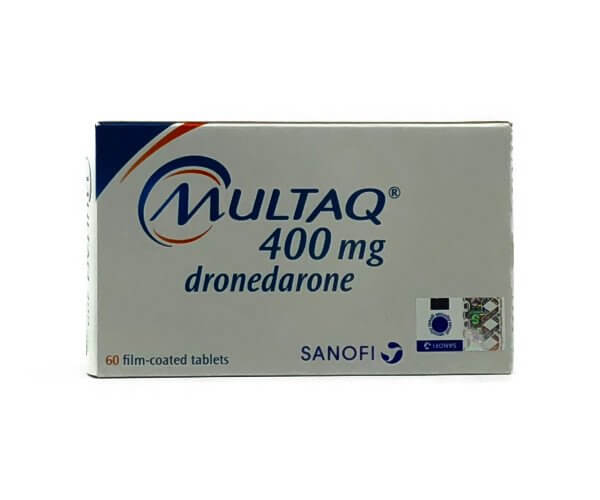
For visual reference only; actual product may vary
US Name:
Multaq
Alternative Names:
Multaq, Droncor
Active Ingredients:
Dronedarone
Brand Manufacturer:
Sanofi-Aventis
Manufacturer Location:
France
Click here to view Product Insert
For visual reference only; actual product may vary
Multaq (dronedarone) is a prescription antiarrhythmic medication used to help maintain a normal heart rhythm in adults with a history of paroxysmal or persistent atrial fibrillation (AFib). It is taken to reduce the risk of hospitalization due to AFib complications.
| Droncor Generic | 400mg 60 Tablets |
-
|
Our price: $165.00 |
|
| Multaq Brand | 400mg 60 Tablets |
-
|
Our price: $187.00 |
Multaq is an antiarrhythmic medication prescribed to help maintain a normal heart rhythm in stable adult patients. Its active ingredient is dronedarone. This medicine is specifically for people with a history of paroxysmal or persistent atrial fibrillation (AFib). It is used after a procedure called cardioversion restores a normal heartbeat. Multaq helps keep the heart in a normal sinus rhythm. This reduces the risk of AFib returning. It is an important part of a comprehensive treatment plan to manage this heart condition.
Multaq works by blocking certain electrical signals in the heart that can cause an irregular heartbeat. It affects multiple channels that move ions in heart cells. This action helps to stabilize the heart’s electrical activity. By regulating these impulses, Multaq keeps the heart beating at a normal, steady pace. This mechanism is what helps prevent the recurrence of atrial fibrillation episodes. It is a Class III antiarrhythmic drug. However, it also shows effects of other drug classes. This multi-channel action makes it effective for many patients.
Multaq is prescribed for clinically stable adults who have a history of paroxysmal or persistent atrial fibrillation. This medication is for patients whose heart has been returned to a normal rhythm. It is not for everyone. Due to its safety profile, doctors consider other options first. Multaq should not be used by patients with current or past heart failure. It is also not for those with certain heart problems like left ventricular systolic dysfunction. Your doctor will decide if Multaq is the right choice for you based on your medical history.
Multaq is typically taken as a 400 mg oral tablet twice daily with meals. You should take one tablet with your morning meal. Take the second tablet with your evening meal. Swallowing the tablet whole with a glass of water is important. Do not crush or chew the tablet. Taking Multaq with food helps your body absorb the medication correctly. Always follow your doctor’s instructions exactly. Do not change your dose without speaking to your healthcare provider. Consistency is key to managing your heart rhythm effectively.
Multaq may cause side effects, though not everyone will experience them. The most common side effects involve stomach issues. These can include diarrhea, nausea, vomiting, and stomach pain. Some people also experience indigestion, especially when first starting the medication. Other potential side effects are feeling very tired or weak. Skin problems like redness, rashes, or itching can also occur. In rare cases, Multaq can cause serious liver problems. Contact your doctor if you experience any persistent or severe side effects. This is not a full list of all possible side effects.
Choosing IsraelPharm for your Multaq prescription ensures you receive genuine medication from a trusted and reliable source. We are committed to providing affordable access to brand-name medications directly to your door. Our straightforward ordering process and dedicated customer service team make managing your prescriptions simple and stress-free. With IsraelPharm, you can be confident in the quality and authenticity of your medication. We help you maintain your health affordably and conveniently. Shop with us for a seamless and supportive pharmacy experience.
You may experience these when you begin taking Multaq:
Additional side effects may include:
This is not a complete list. Contact a doctor for medical advice about side effects. For serious issues, seek immediate medical attention.
Multaq is indicated to help maintain a normal sinus rhythm after successful cardioversion in clinically stable adult patients with a history of:
Multaq begins to work within a few hours of the first dose, but its full effect on stabilizing heart rhythm may take several days. Consistent use is crucial for the medication to effectively maintain a normal sinus rhythm and reduce atrial fibrillation episodes. Your doctor will monitor your progress to ensure the medication is working as intended for your specific condition.
Multaq should always be taken with a meal to ensure it is absorbed properly by your body. The standard recommendation is to take one tablet with your morning meal and one tablet with your evening meal. Taking it on an empty stomach can significantly reduce its effectiveness in managing your heart rhythm, which may increase your risk of hospitalization.
If you miss a dose of Multaq, you should take the next dose at your regularly scheduled time. Do not take two doses at once to make up for the missed one. Doubling the dose can increase your risk of experiencing serious side effects. Maintaining a consistent schedule is important for the drug's effectiveness, so try to take it at the same times each day.
You should limit alcohol consumption while taking Multaq, as it can potentially affect your heart rhythm and blood pressure. Alcohol may also worsen side effects like dizziness or fatigue. It is best to discuss your alcohol use with your doctor, who can provide personalized advice based on your overall health and treatment plan for atrial fibrillation.
You must avoid grapefruit and grapefruit juice while taking Multaq, as they can increase the amount of the drug in your bloodstream to dangerous levels. This interaction significantly raises the risk of serious side effects, including a dangerous heart rhythm problem. Always read food labels and inform your doctor about all medications you take to prevent harmful interactions.
Multaq is not a blood thinner; it is an antiarrhythmic medication designed to manage your heart's rhythm. However, patients with atrial fibrillation often have an increased risk of stroke and are frequently prescribed a separate blood thinner (anticoagulant) along with Multaq. Your doctor will determine the best combination of medications for your condition to manage both rhythm and stroke risk.
Multaq can, in rare cases, cause severe liver problems, which is why monitoring is important. Your doctor will likely perform blood tests to check your liver function before you start treatment and periodically thereafter. You should contact your doctor immediately if you notice any signs of liver injury, such as yellowing skin or eyes (jaundice), dark urine, or upper stomach pain.
Multaq should be stored at room temperature, away from excess heat, light, and moisture. Keep the medication in its original container and out of the reach of children and pets. Do not store it in the bathroom, as the humidity can damage the tablets. Proper storage helps ensure the medication remains safe and effective until its expiration date.
Paroxysmal atrial fibrillation involves episodes that start and stop on their own, usually lasting less than a week. Persistent AFib refers to an irregular rhythm that lasts longer than seven days and requires treatment to restore a normal rhythm. Multaq is approved for patients with a history of either type who are currently in normal sinus rhythm.
Yes, regular monitoring is essential while you are taking Multaq to ensure its safety and effectiveness. This typically includes periodic EKGs (electrocardiograms) to check your heart rhythm. Your doctor will also order routine blood tests to monitor your liver and kidney function, as well as your body's electrolyte levels, to detect any potential problems early in your treatment.
You should not stop taking Multaq without first consulting your doctor, even if you feel well. Abruptly stopping the medication could cause your atrial fibrillation to return or worsen, potentially increasing your risk for a stroke. Your doctor will provide guidance on how to safely discontinue the treatment if necessary, which may involve a specific plan to switch to another therapy.
Multaq can potentially cause changes in blood pressure, though this is not among its most common side effects. Your doctor will monitor your blood pressure during your treatment. If you experience symptoms like dizziness, lightheadedness, or fainting, you should report them to your healthcare provider, as they could be related to your blood pressure and may require medical attention.
Multaq (dronedarone) was structurally modified from amiodarone to create a better safety profile, especially regarding thyroid and lung toxicity. While both are antiarrhythmic drugs used for AFib, Multaq generally has a lower risk of certain long-term side effects. However, it is not suitable for patients with heart failure, a condition where amiodarone might sometimes be used with caution.
Send Your Prescription
No Hidden Fees
Generally 7-10 Business Days

IsraelPharm has been delivering lost cost prescriptions from Israel for over 15 years worldwide. Daily flights allow us to get your medications dispatched fast! Delivery to the USA is under 10 days and you can track and trace every order.

Discover how Auvelity for MDD offers a faster, unique approach to treating chronic depression compared to traditional SSRIs and SNRIs.

Is your generic medication truly safe? Explore the hidden risks of global drug manufacturing and learn how sourcing brand-name medications can protect patient safety.

The symptoms of menopause, during which women can feel physical and emotional discomfort, are often blamed entirely on declining levels of estrogen, but the hormone imbalance behind the symptoms is more complicated. In the years