My Personal Journey with Heartburn and Nexium for GERD Relief
Struggling with acid reflux? Sarah Ryan shares her personal experience using Nexium for GERD and how to find affordable brand-name relief through a licensed pharmacy.
Spend $99, get free U.S. shipping*
Tariff now required on U.S. shipments. Learn more »
Tel: 1-866-456-3768 Fax: 1-866-544-8993

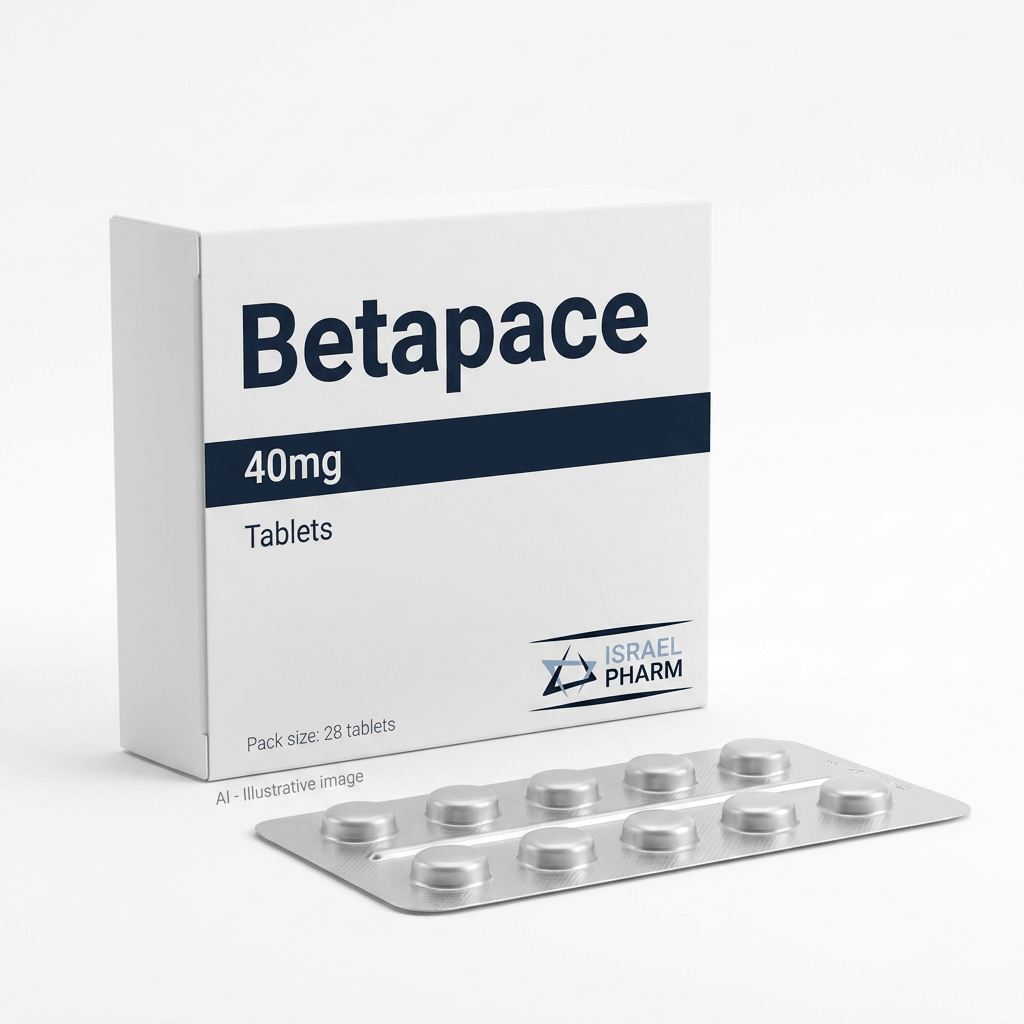
For visual reference only; actual product may vary
US Name:
Betapace
Alternative Names:
Sotalol, Sotolol
Active Ingredients:
Sotalol
Brand Manufacturer:
Generic
Manufacturer Location:
UK
Click here to view Product Insert

For visual reference only; actual product may vary
Betapace (Sotalol) is a beta-blocker medication used to treat serious heart rhythm disorders, including atrial fibrillation and ventricular arrhythmias. It helps maintain a normal, steady heartbeat, ensuring your heart functions effectively. Order from IsraelPharm for affordable access to this essential medication.
| Sotalol Generic | 160mg 28 Tablets |
-
|
Our price: $25.00 |
|
| Sotalol Generic | 80mg 28 Tablets |
-
|
Our price: $18.00 |
|
| Sotalol Generic | 40mg 28 Tablets |
-
|
Our price: $15.00 |
Betapace is a medication, with the active ingredient Sotalol, used to treat serious heart rhythm disorders (arrhythmias) like atrial fibrillation and ventricular tachycardia. It is classified as an antiarrhythmic agent and a beta-blocker, working to restore a normal heart rhythm and protect the heart. By controlling the heart’s electrical activity, Betapace helps maintain a steady, regular heartbeat, which is crucial for patients with these specific conditions. It is a prescription medication that requires careful supervision by a healthcare provider to ensure it is used safely and effectively.
Betapace works through a dual-action mechanism to control heart rhythm. It functions as both a Class III antiarrhythmic agent and a non-selective beta-blocker. As a beta-blocker, it blocks the effects of adrenaline on the heart, which slows the heart rate and reduces the force of the heart’s contractions. As an antiarrhythmic, it prolongs the duration of the heart muscle’s electrical signal (the action potential), which helps to stabilize the heart’s rhythm. This combination makes it very effective at preventing and treating both atrial and ventricular arrhythmias by making the heart more resistant to abnormal electrical signals.
Betapace is for patients who have been diagnosed with specific, often life-threatening, heart rhythm disorders. It is primarily prescribed for individuals with documented ventricular arrhythmias, such as sustained ventricular tachycardia, that are considered life-threatening. It is also used for patients with symptomatic atrial fibrillation or atrial flutter who need help maintaining a normal sinus rhythm. Betapace is generally considered when other treatments have not been effective, and its initiation often requires careful monitoring in a hospital setting to manage potential risks, especially the risk of new arrhythmias.
The dosage and administration of Betapace must be carefully determined and individualized by your doctor. Treatment is typically started in a hospital setting so your heart can be monitored for at least the first three days to watch for side effects, particularly new or worsened arrhythmias. The dose is based on your specific condition, kidney function, and response to the medication. It is usually taken once or twice daily, and it’s important to take it consistently at the same time each day. Your doctor will likely start you on a lower dose and gradually increase it as needed while monitoring your progress and kidney function closely.
The most common side effects of Betapace include feeling tired or dizzy, a slow heartbeat (bradycardia), shortness of breath, headache, and nausea or vomiting. While many people experience mild side effects, Betapace can also cause more serious issues. The most significant risk is its potential to cause new or worsen existing heart rhythm problems (proarrhythmia), including a dangerous type called Torsades de Pointes. Other serious side effects can include chest pain, severe dizziness, fainting, or signs of heart failure like swelling in the ankles or legs. You should contact your doctor immediately if you experience any severe or concerning symptoms.
Buying from IsraelPharm ensures you receive authentic Betapace (Sotalol) at a competitive price, shipped directly to your door. We are committed to providing affordable access to essential medications without compromising on quality or safety. Our streamlined online ordering process is simple and secure, and our customer service team is available to assist you with any questions. By choosing IsraelPharm, you benefit from our global sourcing, which allows us to offer significant savings on brand-name and generic medications approved for sale in countries with the highest regulatory standards.
Common side effects of Betapace may resolve as your body adjusts. However, some can be serious. Always consult your doctor for medical advice about side effects.
Betapace (Sotalol) is indicated for the treatment of documented, life-threatening ventricular arrhythmias and the maintenance of normal sinus rhythm in patients with symptomatic atrial fibrillation and atrial flutter.
Betapace begins to affect your heart rhythm shortly after you take it, typically reaching its peak effect within 2.5 to 4 hours. However, your doctor will need to adjust the dose over several days to find the most effective and safe level for you. This is why treatment is usually started in a hospital, allowing for continuous monitoring to ensure the medication is working correctly and safely.
If you miss a dose of Betapace, take it as soon as you remember. However, if it is almost time for your next scheduled dose, skip the missed one and continue with your regular schedule. Do not take a double dose to make up for the one you missed. Taking too much sotalol can be dangerous and increase your risk of serious side effects.
You should use caution when drinking alcohol while taking Sotalol (Betapace). Alcohol can increase the blood pressure-lowering effects of this medication, which may lead to increased dizziness, lightheadedness, or fainting. It is best to discuss your alcohol consumption with your doctor, who can provide personalized advice based on your health and treatment plan. Limiting or avoiding alcohol is often recommended.
Yes, Betapace (Sotalol) is a beta-blocker. However, it is unique because it also has other properties. It belongs to a group of drugs known as beta-adrenergic blocking agents but also has Class III antiarrhythmic properties. This dual action allows it to both slow the heart rate and directly stabilize the heart's electrical rhythm, making it effective for specific types of serious arrhythmias.
No, you should never stop taking Betapace suddenly without consulting your doctor. Abruptly stopping a beta-blocker can cause your condition to worsen and may lead to severe chest pain (angina), a heart attack, or dangerous changes in your heart rhythm. Your doctor will provide instructions on how to safely and gradually decrease your dose if you need to stop the medication.
Yes, fatigue or tiredness is one of the most common side effects of Betapace. As a beta-blocker, it slows down your heart rate and can lower blood pressure, which may lead to a feeling of decreased energy, especially when you first start taking it or after a dose increase. This side effect often lessens as your body adjusts to the medication over time.
Betapace is different from many other beta-blockers because it has dual properties. While it slows the heart rate like standard beta-blockers (e.g., metoprolol), it also has potent Class III antiarrhythmic effects that change the electrical activity of the heart muscle. This makes it specifically useful for treating serious rhythm disorders like ventricular tachycardia and atrial fibrillation, not just for managing blood pressure or angina.
Starting Betapace requires careful medical supervision, usually in a hospital, for at least three days. This is done to monitor your heart's response using an electrocardiogram (ECG or EKG), watching for any signs of a new or worsened arrhythmia (proarrhythmia). Your kidney function will also be regularly checked, as the dosage often needs to be adjusted based on how well your kidneys are working.
You should store Betapace tablets at room temperature, between 68°F and 77°F (20°C and 25°C), in a dry place away from direct light and moisture. Do not store them in the bathroom, as humidity can damage the medication. Keep the bottle tightly closed and out of the reach of children and pets to prevent accidental ingestion.
Yes, Betapace can affect blood sugar levels and should be used with caution by people with diabetes. It can mask some of the common signs of low blood sugar (hypoglycemia), such as a rapid heartbeat. However, it does not suppress dizziness or sweating. If you have diabetes, your doctor may advise you to monitor your blood sugar more closely when starting or adjusting this medication.
It is generally recommended to take Betapace on an empty stomach, either one hour before or two hours after a meal. Food, particularly milk and other dairy products, can significantly reduce the absorption of sotalol by your body, making the medication less effective. For best results, try to be consistent with how you take it in relation to meals.
An overdose of Sotalol is dangerous and requires immediate medical attention. Symptoms can include an extremely slow heart rate, severe dizziness, fainting, shortness of breath, and signs of heart failure. In severe cases, it can lead to life-threatening heart rhythm problems. If you suspect an overdose, call emergency services or a poison control center right away.
Send Your Prescription
No Hidden Fees
Generally 7-10 Business Days

IsraelPharm has been delivering lost cost prescriptions from Israel for over 15 years worldwide. Daily flights allow us to get your medications dispatched fast! Delivery to the USA is under 10 days and you can track and trace every order.

Struggling with acid reflux? Sarah Ryan shares her personal experience using Nexium for GERD and how to find affordable brand-name relief through a licensed pharmacy.

Polycystic Metabolic Ovarian Syndrome (PMOS) is the new clinical name for the condition long known as Polycystic Ovary Syndrome (PCOS). The change reflects a deeper scientific understanding that insulin resistance and metabolic dysfunction sit at

Off-label prescribing means using an FDA-approved medication outside thant defined approved use.
The drug itself is identical; only the purpose, dose, age group, or form differs.
Off-label prescribing is legal in the United States and is governed by physician judgement.